If you’ve been reading along this week, you may recall my struggle to just let it go regarding Mr. F’s next contract placement. He finally interviewed for the position in a less than desirable area ( for us, anyway, we’ve heard some people love it ) and we were both prepared to give it a go. But for Mr. F, his patient care and working ethically are always top priorities and it seemed like this particular position would stretch both outside the boundaries of what he is comfortable with. So, we passed.
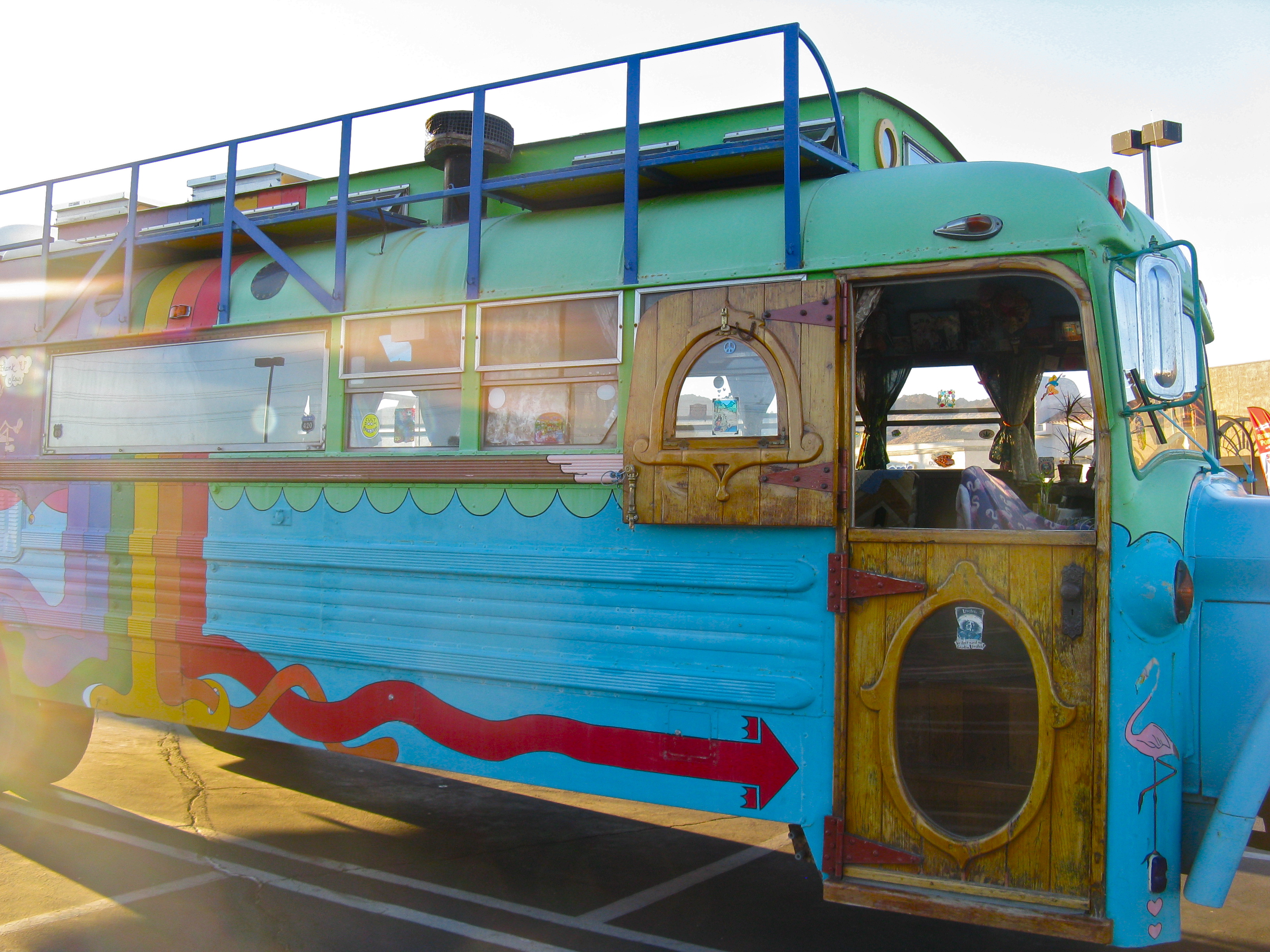
We believe in taking advantage of any opportunity to exercise our sense of freedom & adventure, so Saturday morning, we leave for a week-long road trip down the West Coast! We started planning out our trip last night and are excited to spend some time exploring the treasures along the Pacific.
Now, this is where you come in! Any suggestions for must see/ must do places/activities along the West Coast from let’s say Astoria, OR down to San Diego, CA? We’ll be camping along the coast and are most interested in exploring the small towns, artsy spots and natural beauty along the way ( i.e. probably avoiding big cities ). Have any suggestions for an Artsy & her Mr. Forager? Let me know in the comments below!
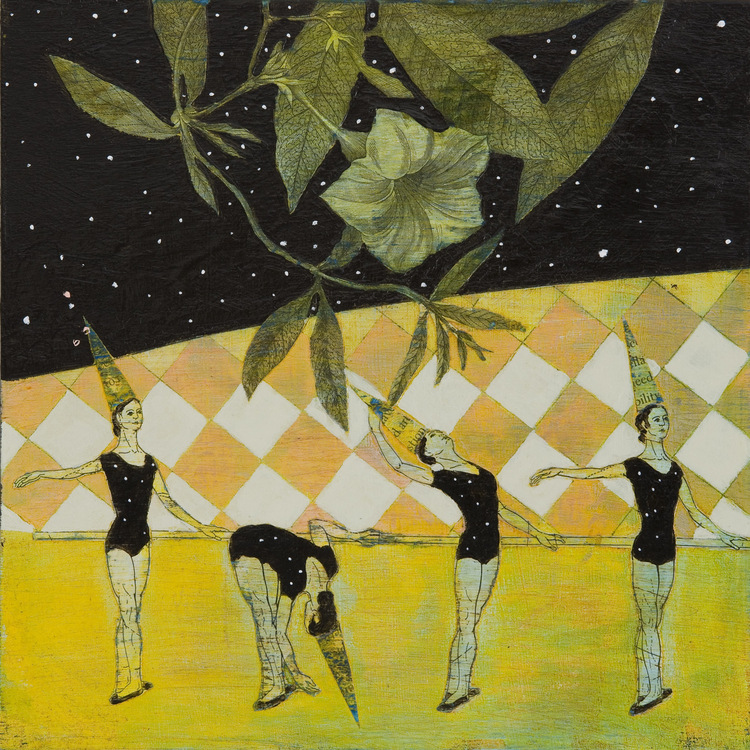
Its so easy sometimes to lose sight of exactly who we are. Circumstances bend and shape us in ways we didn’t foresee and then one day, we glance in the mirror and don’t recognize the face looking back. The work of Los Angeles based artist Winifred Johnson Brewer seems to address issues of confusion in the environment and within ourselves.
On her website, the artist recounts a story of confusion happening among honeybees. Although the bees are not attracted to artificial light like moths might be, the artist witnessed the insects circling a bare lightbulb in her studio, then dying in a pool on the floor. The bees seem to be forgetting their very innate nature, then suffering the consequences for it. How often have we done the same? Lost sight of our own talents or goals in order to fit in or succeed? If we continue to don our masks, our real selves are likely to go the way of the honeybee.
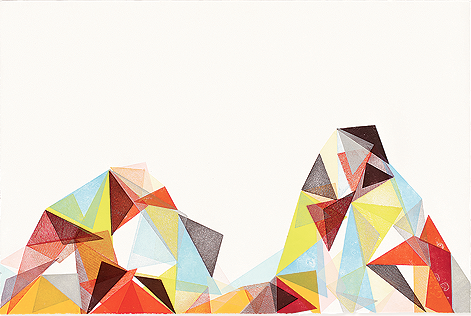
The snow is beginning to fall in the upper elevations on the Olympic Mountains here in Washington. Something about the steep crags covered in snow melts my heart and captures by soul every time I see it. I love that Mr. F always points it out to me, when the snow begins to appear, to make sure I don’t miss it. In her woodblock prints, Melbourne artist Ellie Malin reduces the mountainous landscape to their most simple pointed forms.
The way she uses opaque and translucent shapes to echo the varying planes of the mountains captures the mysterious layers perfectly. These prints make me want to hike through each canyon and over each peak! There is always something about breaking forms down to their very simplest shapes and planes that I find so satisfying.
A big part of the adventure of living this gypsy lifestyle that we’ve chosen is in the unknown. We are never sure where we might be from one contract to the next and in these days of healthcare upheaval ( Mr. F works in physical therapy ), the unknown is mixed with a heavy dose of uncertainty. A lot of where we end up is completely up to chance– when Mr. F can start, what jobs are available at that time. It really is just a complete roll of the dice.
For a control freak like me, it involves giving up a massive amount of security. Over the past two+ years, I’ve learned to deal with the loss of control pretty well. There is usually a bit of a freak-out involved at the beginning, in the race to find and secure a temporary rental, packing, unpacking, etc. Right now, I’m in freak out mode, ya’ll. Mr. F is interviewing today for a contract in a less-than-ideal area. But the contracts have been scarce this go ’round and although we could wait for something better to come along, we have financial goals over the next few years and want to keep on top of them. So I’m struggling today to let go. To let go of my fear of not being able to find a decent place to live, of spending the holidays far from family and friends, of the temptation to persuade Mr. F to turn the contract down if offered.
But that practice of letting go isn’t just a product of this lifestyle. It’s what marriage or any relationship is about, too. Releasing our own expectations for the greater good, what is best for both. It can be painful at first, but hopefully each act of letting go leads us somewhere we might never have gone on our own.
All images by Artsy Forager. See more from This Artsy Life by following Artsy on Instagram.
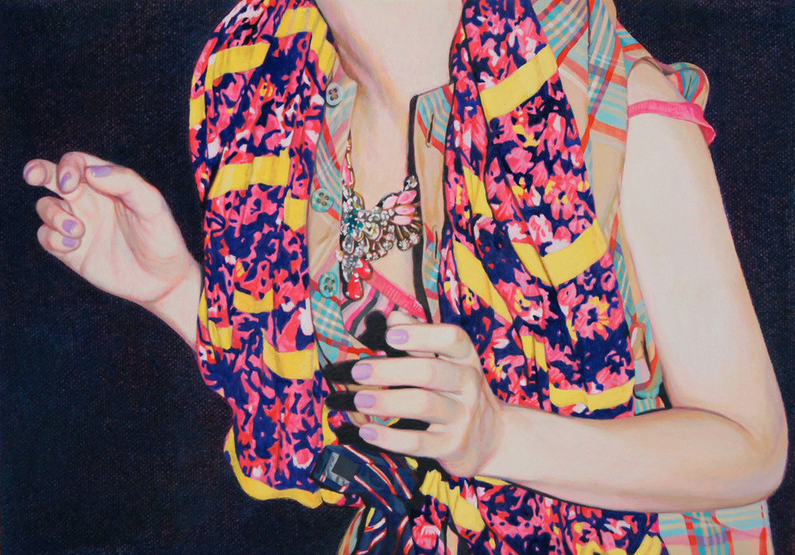
It’s so easy to forget how good we have it. We get so caught up in what isn’t going right in our lives or what is challenging us that we neglect to remember how very full of wonder and sparkle life is. The work of Japanese artist Naomi Okubo is so full of layered jubilant pattern that you can’t help but remember your lost joie de vivre.
I love that it feels like you’ve walked into the middle of some kind of fabulous party, completely with confetti and streamers. The flat layering of texture and pattern give her paintings a collage like feeling to them, snaps of life pieced together to create irresistibly charming work.
We are now well into November and the holiday season is approaching at lightning speed ( see yesterday’s Artsy Holiday post, early I know, but I couldn’t resist! ). The brilliant October color has yielded to the breezes and leaves are now scattered across the landscape. Nature has begun her winterizing and it seems a good long time before the flowers show themselves again. These watercolors by Northwest artist Kiana Mosely have the feel of flowers pressed between the pages of books to remind us that spring will begin again.
Kiana’s flowers have such a flowing simplicity and the characteristic “bleedy” quality of watercolors reinforces their pressed flower sensibility. Its almost as if these flattened floral shapes are here to remind us that though the spring seems far away, the flowers are still there, waiting for the thaw.
If you’d like to see more of Kiana Mosely‘s work, please visit her website and Facebook page. Prints of these gorgeous watercolors are also available in her Etsy shop!
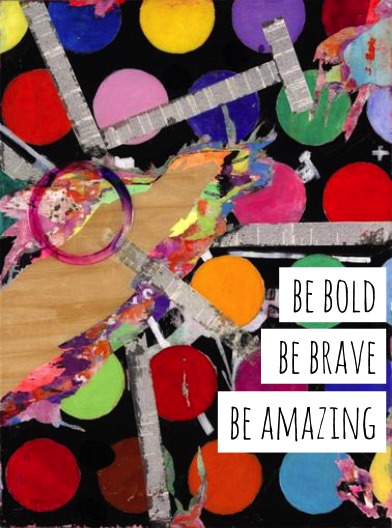
I’m a firm believer that art is not just about what the artist makes, but what you take from it. Living the Artsy isn’t just about living with art, but living out art each day in our lives. One of the things I love most about the work of this month’s Featured Artist M.A. Tateishi is how bright and downright audacious it is. This artist is not afraid to use color, to deconstruct and then resurrect her surfaces, all resulting in work that inspires me to be move forward as bravely as she does.
I thought perhaps you could use a bit of artsy inspiration, too, so in the words of Simon de Pury..
I’ve been finding things in life to be a bit daunting lately, but just looking at M.A.’s work and putting together this post, thinking about these women that I look up to, who are so much braver than me, I feel empowered and encouraged. I hope you do, too.
I’ve always been fascinated by the way our minds inform our eyes. How our brains connect the proverbial dots to tell us that when we see certain shapes configured this way or that, we’re seeing three dimensional planes out of what is actually two dimensional surface. In the abstract paintings of artist Agnes Barley, we see that by placing certain shapes against one another just so, the illusion of three dimensional space is created.
Her shapes twist and turn and create shadows of themselves upon the painted surface, further reinforcing the dimensionality of the forms. The objects created by putting these pieces together feel so architectural, they seem as if they could be studies for structures or sculpture. I kind of want to climb on one and sit atop it, taking in the view.
Creating and choosing art for healthcare environments is about much more than just beautifying a space. People in those environments are often worried, stressed, sad, and in need of healing. Experts have found that through evidence-based design, these places can become much more warm and welcoming and certain design choices can actually aid the healing process. Carefully chosen artwork in these settings not only has a positive impact on the patients, visitors, and staff, but also on the perception of care given by the facility.
I’ve had several artists, designers, and publishers ask about placing artwork in healthcare environments. They want to be a part of creating a healing environment, but aren’t sure how to go about it. So considering evidence-based design and my own experiences in curating art for healthcare, I’ve put together a few guiding principles when creating or choosing art for healthcare environments–
1 | happy, engaging imagery
Nine times out of ten, unless you’re there for the entrance of a new baby into the world, being in a hospital or other type of healthcare environment is not a happy or joyful occasion. And with all the weird smells, strange noises, and necessary sterility of these settings, no wonder they can be seen as such cold, intimidating places! Creating and curating art for healthcare environments that fosters a more warm, welcoming atmosphere goes a long way toward making patients and visitors feel more at ease in their surroundings. Work that makes us smile, reminds us of family and love, and calls to mind memories of happy times all can work together to ease the mind and spirit.
Often when you ask a hospital patient how they’re doing, you may get an answer that begins with “I’d rather be…”. Patients and visitors often wish they were anywhere but where they are. Artwork that creates a sense of voyeuristic escape can lessen anxiety by giving the viewer a means of liberation from their current situation. They’re able to think less about their pain or circumstances as their mind wanders and wonders what might be over that hill or around that bend.
3 | create a sense of calm, peacefulness and positivity
By using natural, organic imagery as symbols of peace, restoration, and comfort, the artwork in healthcare environments can become instruments of healing. Studies have shown that patients shown nurturing scenes of nature required lower strength pain medication. These kinds of images also foster a sense of the world outside the walls of the facility and the goal to get back to where the skies are blue and the waters peaceful.
Hospitals can be lonely, scary places. Choosing artwork that may garner conversation goes a long way toward creating connections among patients and visitors, as well as providing a much needed mental escape. Sculpture and interactive digital artwork do well to give patients and visitors a purposeful sense of exploration and the unexpected and abstract can create a path to solving a puzzle and thereby, a means of distraction.
5 | create reflections of community
Each hospital or healthcare facility has an important role to play as a part of a community. Honoring the history, landmarks, and atmosphere of that community can create a sense of familiarity and connection in places where we often feel helpless and alone.
Creating and curating art for healthcare environments is about so much more than simply manufacturing a pleasing looking space. Instead of merely being places of clinical procedures and processes, through art and design hospitals and other medical facilities are becoming places of nurturing and healing. Artists, designers, and consultants are looking more and more not at what the artwork speaks to them, but how it promotes positivity and restoration to the visitor and patient.
You can read more on evidence based design in this Guide to Evidence Based Art by Kathy Hathorn, MA, and Upali Nanda, Ph.D.
Here in the Northwest, we’re no strangers to the rain. Months and months of time goes by seeing life through a haze of drizzle and mist. Although the rain can be a bit tedious, Mr. Forager and I are always struck by the beauty it brings out in the way the landscape becomes distorted. In her work, Brooklyn artist Alyssa Monks began with hyperrealistic depictions of women bathing and now finds the figures being pulled into a more abstract world.
Always interested in the distorting characteristics of figures seen through a veil of water, steam and glass, Monks’ latest work is pushing the figures further into the mist, leaving the figure secondary to the surface behind which she hides. As the tall cedars peek out timidly from the fog, so do these figures seem hesitant to reveal themselves, adding the voyeuristic feel of Monks’ work.





![This Artsy Life: Weekend 45 [ Lessons in Letting Go ]](https://artsyforager.com/wp-content/uploads/2013/11/IMG_1696.jpg)