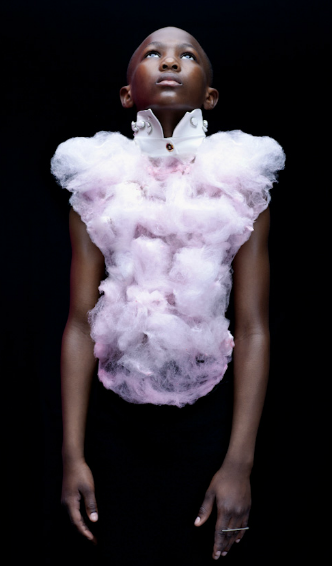
We are all creatures of our past and present. Influenced and affected by what has come before us, as well as our current experiences, our future selves a hybrid of what was and is. In her latest portraiture, Australian photographer Jacqui Stockdale weaves fantastical tales of identity inherited and identity discovered.
Her work has a vintage, tin-type feel, yet the figures we see are utterly contemporary. Modern masks mimic ancient ritualistic garb and figures pose rigidly as if sitting for a daguerrotype. But there seems to be a defiance in each face, a fight against a past, perhaps an assertion of the future.
It seems that spring in Eureka is a very windy season. The sun is shining and from our cozy apartment, it looks deceptively warm. But upon stepping outside we’re quickly reminded that we are in a transitional season– the air still has a chill and the warmth of stillness is welcome. The breezes blow and scatter fallen leaves, branches and petals, but at the same time, they are carrying away the grey and damp of winter, ushering in the peace and warmth of the coming summer. In her Room to Breathe series, artist Laura E. Pritchett explores the magical influence of a breath of air.
Pritchett has made a big splash in the Instagram world with her breathtakingly beautiful photography– studies of light, air, and seasons ( follow her IG feed here for regular doses of serene inspiration ). While perhaps more well known for her photography, these paintings translate the same quiet wistfulness found throughout her work. You can almost feel the soft breeze as it wafts up, up, and away, taking with it cares and troubles.
It’s easy to look at the past through a utopian filter, usually fueled by too many historical novels and costume dramas. We’re often shown worlds filled with richness, decadence and graceful living. But under all the frills and frippery lie the other side of riches– the backs upon which the wealth is gained, those who serve, and ultimately, the problems caused by overabundance. The work of artist Louis St. Lewis touches on the themes of decadence, privilege and the myth of history.
I’ll admit, I’ve been guilty of watching one too many Jane Austen movies, finding myself wishing I could have been born into aristocratic 19th Century privilege rather than 20th Century middle class. Oh to have the luxury of being a “lady”! With a lady’s maid at my bidding and all the time in the world to read, paint, sew, dance and all the other proper skills a lady must possess. But then there were always little hints to break the facade of carefree privilege– the pressure to marry “up”, to bear sons, the boredom of not being able to pursue what may truly be of interest.
Mr. F and I just last night were talking about what being “rich” might mean. For us, it would mean freedom– freedom to travel, to spend our lives doing exactly what we want to do when we want to do it. But with that freedom must come an incredible burden and responsibility, too. Perhaps it is best that we remain solidly middle class. We live a life of privilege by the standards of most of the world’s population and we do have freedom– the freedom to chose to live our lives in the way we choose. It is a mythological goal, but one that is definitely attainable with vision and sacrifice.
To see more of the work of Louis St. Lewis, please visit his website. You can see his work in New Orleans at one of my favorite galleries, Gallery Orange!
Remember the old days, when all your photographs were on paper and were precious and fragile? If you’ve ever had a photo destroyed by heat or liquid, you know what I’m talking about. The once familiar image becomes distorted, a face we knew now obliterated. The work of Venezuelan photographer Angelica Garcia reminds us that though our photographs can now be “backed up” and last forever, their subjects are still fragile and fading.
The photographer manipulates each photograph, not with digital software, but hand manipulates each one post printing. Purposefully distorting and abstracting each figure, we are left with ghostly apparitions of what was once. The plainclothes style of each figure makes them universal and relatable, someone we might have known.
Mr. F and I are generally cheerful, non-moody people, but we each have what we call our “blah” days. You know the ones, the days when you just aren’t feeling quite yourself, the days when all you want to do is curl up in bed, speak to no one and watch trash tv all day. These paintings by French artist Lou Ros struck me in their contemplation and moodiness, beautifully painted representations of melancholy.
From the use of a primarily grey and neutral palette with punctuations of pink and other vibrant colors, we’re reminded that although the grey sets in temporarily, it is by no means permanent. I love the artist’s use of frenetic brushwork and drips, the slightly “unfinished” quality to each piece accentuating the fleeting nature of mood.
To see more work by Lou Ros, please visit the artist’s website.
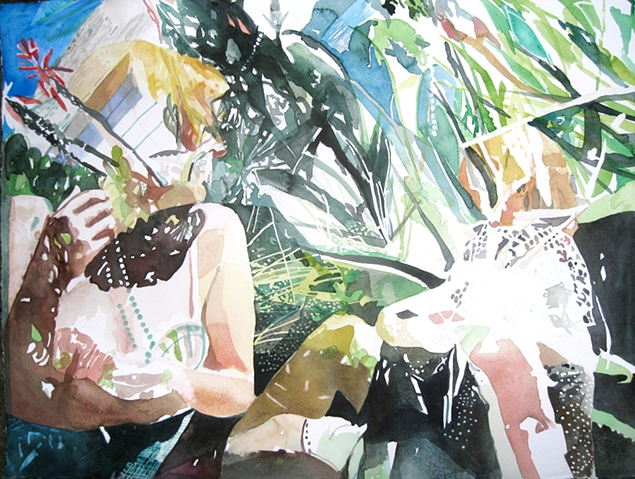
Oh the sun drenched days of summer! It’s February and while I love winter and don’t mind the misty rain and clouds of the Northwest, I do love those lazy summer days. These watercolors by Oakland artist JD Olerud, transport me back to those days when the sun wasn’t such a stranger.
There is something about watercolor as a medium that captures the magic of dappled sunlight so perfectly. Olerud using his white spaces to create that wonderful sense of the warmth and light of a summer day. I almost feel like squinting or wearing sunglasses when looking at these! Oh to lie down in the grass and feel the radiant light once more! Of course, Mr. F and I will be spending the next three months on the soggy Northern California coast, so I expect it will be some time unit l get to experience that bliss. 😉
Do you truly remember what it was like to be a completely innocent child? Free from guile and not yet succumbed to the pressures of the adult world? For so many, that innocence is taken away at a younger and younger age. This series of photographs by French artist Isabelle Chapuis illustrates the striking juxtaposition between the push and pull of childhood innocence and the lurking aggression of adulthood beneath the surface.
When left to their own devices and free from outside pressure, kids will be kids. All they want to do is play games, eat candy, enjoy and revel in a world without responsibility. But in so many cultures, including our own, children are being raised with the expectation of becoming tiny versions of the adults by whom they are surrounded. The overachieving mom expects her daughter to excel in every way, the young boy growing up around gang culture finds it hard to buck against those influences.
There is a sadness about these photographs, even when the boy is taking a more “aggressive” stance, it seems to be a putting on of an act– there is a true feeling of reluctance and hesitation in each photo. He seems to be a boy who is being coerced into a world in which he doesn’t belong, a child who only wants to enjoy the sweetness of life while it is still possible to do so. Adulthood comes calling soon enough, unfortunately sooner for some than others.
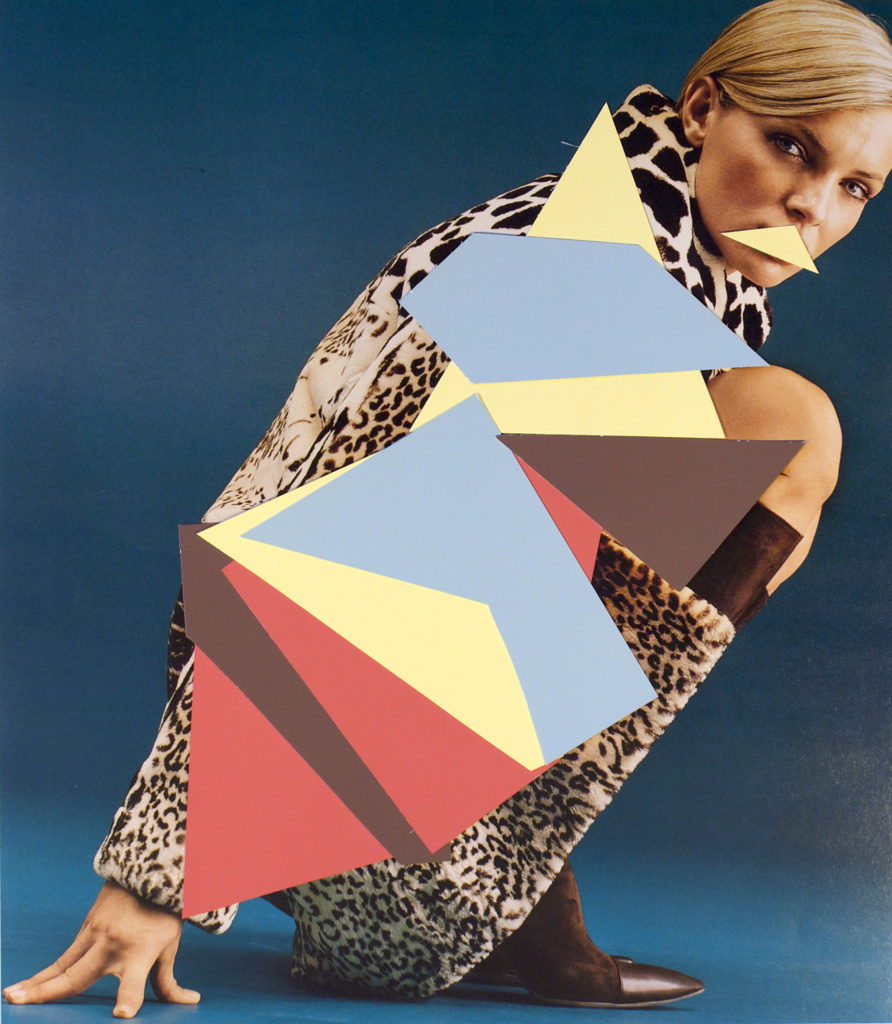
OK, I admit it. I like fashion and all its trappings as much as the next girl. But there is something that doing this traveling thing is teaching me– how to not just live with less, but to desire less. I found these collages by Jonni Cheatwood, acrylic and mixed media applied to the pages of a Neiman Marcus catalog to call attention to our need to chase the latest trend.
As a single girl, I was definitely a bit of a fashionista. Always a bargain shopper, I didn’t spend massive amounts of money, but being single, I had a lot of time to spend hunting down just the right pair of boots or the latest jacket cut. But when we prepared to embark across the country and begin traveling, I had to pare down like crazy and then before we left Seattle, I had to purge even more ( everything we live with right now fits in the back of our car ) and it was painful. Clothes had been such a crutch for me– you see, when I was young, I knew what it felt like to be the girl in class in the hand-me-down clothes, the girl who only got one new outfit for the first day of school, not an entirely new, on-trend wardrobe. So when I was an adult and earning my own way, fashion wasn’t just an indulgence for me, it was a way to get past the feeling of being the girl with the holes in her shoes.
We still find we need to pare down just a touch more, so more purging is occurring. What I’m learning through this process is that there are certain items of clothing I own that I love, not because they are in keeping with the latest trends, but because I love the way they fit, the way the clothes look on me and, most importantly, how I feel in them. Paring down to just what I love is a perfect way to ensure that every piece of clothing is worn and that I feel beautiful and special in everything in my closet. Shopping is hard to resist still, but when I do indulge, it is for something that I know I’ll love and feel good in for years to come. And with the paring down, it has to replace at least one ( preferably two! ) things already in my closet. Not as much thought goes into choosing an outfit for the day, freeing my mind to concentrate on other things and cultivate new, more important ideas. When you chase trends, fashion changes so much, you’re constantly feeding the need for the latest thing. I’d rather fill my life with things that aren’t so easily replaceable.
How about you, Artsies? Are any of you recovering fashion-addicts? How did you overcome?
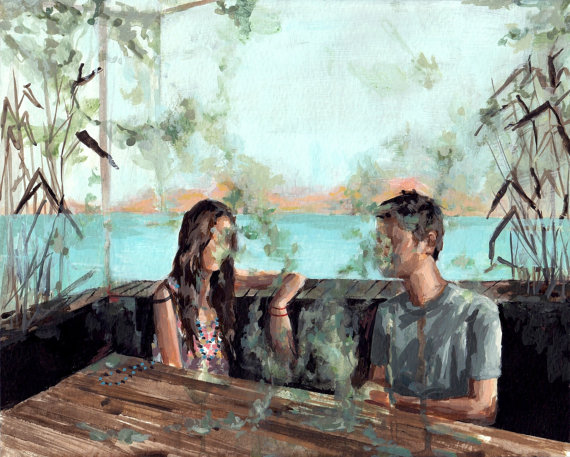
I love writing this blog so much. One of my favorite reasons? An excuse to follow the artistic journey of so many amazing artists. California artist Clare Elsaesser was among some of the first artists featured on Artsy Forager and her work just continues to evolve and grow. This latest body of work is so stunning, I couldn’t wait any longer to give you a peek.
Clare’s work is moving into a more complex, narrative direction with these, yet still retaining the simplicity and graphic style that is her artistic trademark. There is so much visual texture and depth and the emotionality that is always present in her work really takes center stage. It feels like we are being given short glimpses into not just a moment in physical existence, but a visceral, intimate look into the spirit of a moment.
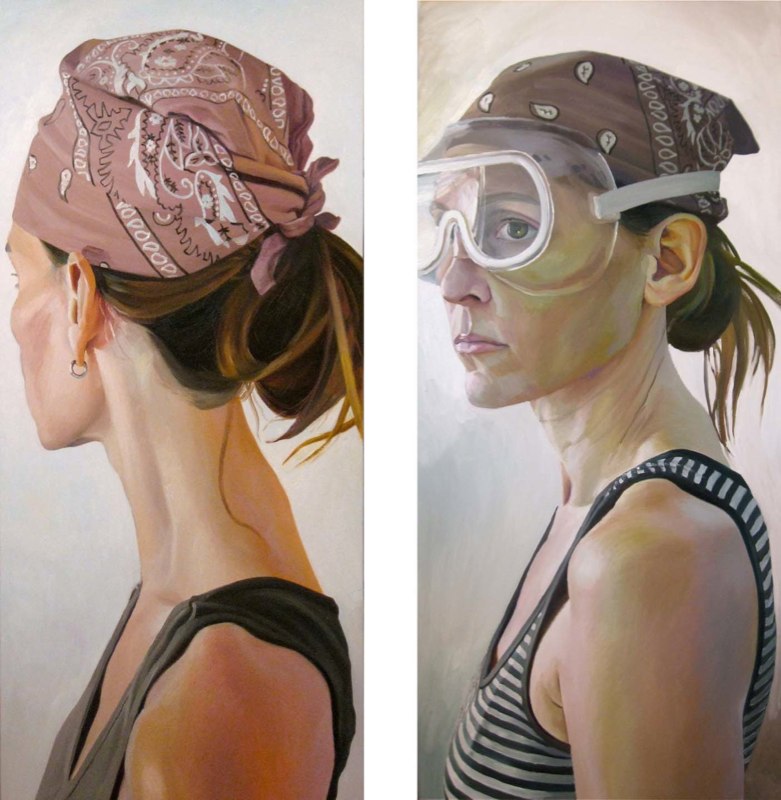
Our memories of the people we love aren’t full scale photos, but more the recollections of the details that made them special to us– the softness of a grandmother’s hand, the freckles on a child’s face, the little particulars that make us unique. In his work, New York painter Stephen Wright gently records the minutia of a face, a lock of hair, the turn of a neck.
Occasionally, when we sitting together, holding hands while watching Colbert or a movie, I am struck suddenly by the realization that when we’re old and perhaps Mr. F is no longer around, that my hands will remember what his felt like around mine. That those physical memories will be more precious than any photograph could be.
Stephen Wright zeroes in on the minor details of his subjects bodies, we get the sense that we can almost feel what that skin is like, soft, maybe cool to the touch, or we feel the sharpness of a clavicle, the roughness of hair gone grey. I love that his compositions often crop out the subject’s face, after all, we know the hands, feet, the shoulders of our loved ones just as well as their faces, but often fail to really think about how integral they are to our memories of them. What about you, Artsies? What details do you remember most about those you love? I can still smell my grandmother’s perfume and know every freckle on my niece’s cheeks!