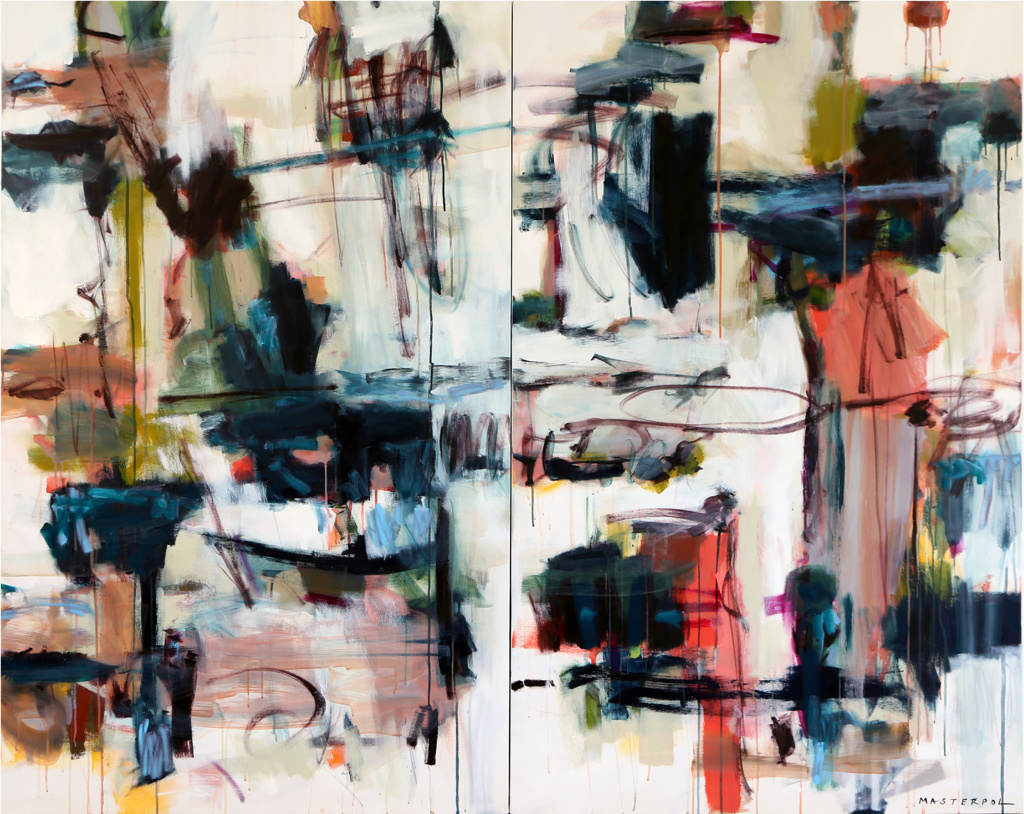
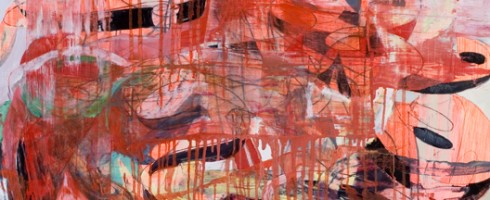
Most artist statements today are filled with thoughts on motivation and meaning. I think we’ve somehow become uncomfortable with the idea of just making art for the sake of creating. There must be some kind of deep intellectual thought behind those marks! And perhaps there always is on one level. For an artist like Rose Masterpol, the reason they create is for the pure pleasure of the process.
The advent of photography freed painters from the need to represent. We can, instead, fully revel in the action and process of the painting itself. Full immersion into pure expression, building layer upon layer of mark and color until what we see is fully pleasing to the artist’s eye. The viewer then, is left to find what it is that those marks mean to them, engaging the outsider with the intimate creation.
While Mr. F and I are camping in Yosemite, I’m resharing some posts you might have missed the first go ’round! Enjoy!
Our memories of places and experiences are not simply visual recollections of what we saw, but a culmination of all that our senses absorbed at the time. The sounds, the smells, our impressions of and reactions to our surroundings. It is in this intuitive way that Portland artist Karen Silve translates her own memorable moments into abstractions of rich layers, swirls and drips of paint.
Market VI, acrylic on canvas, 50×60
Open air markets are cacophonies of stimulation– full of mounds of colorful produce, people talking, laughing, fragrances of coffee, freshly baked pastries and other yummies– all swirl around us. ( Can’t wait for the market here to open for Spring! ) Silve captures the friendly frenzy in her Market Series. ( above & below )
Market IX, acrylic on canvas, 42×46
For her Sacred Places series, she explores the impact of a different kind of stimulation, those stolen moments found when we are surrounded by the quiet of nature. Being in Portland, Silve has access to some of the most spectacular natural spaces in the world ( can you tell I love Oregon?! ). A favorite of hers, and mine, is the Columbia River Gorge, whose lush and quiet beauty she captures in paint.
Sacred Veil II, acrylic on canvas, 58×68
Through our travels, many times I find myself feeling like I’m a bit more attuned to my location and experiences. Perhaps because we are experiencing new places so often, that each one seems enchanting and special in its own way. But there are also times when we fall into the repetition and monotony of every day life and forget that each place and day is unique. Karen Silve’s intuitive expressions of her experiences are reminding me to be fully in each moment, immersing myself into making of a memory.
Market VII, acrylic on canvas, 50×60Morning Glow, acrylic on canvas, 48×48
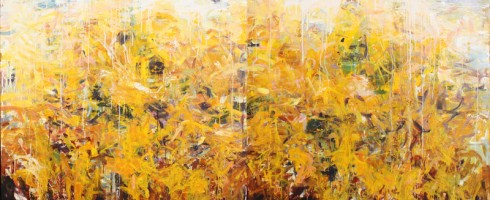
To see more of Karen Silve’s work, please visit her website. In Portland, her work can be seen at Portland Fine Art, but check out her website for representing galleries in New York, Washington, DC, Chicago, California and the UK. Featured image is Yellow Rapture, acrylic on canvas, 96×48. All images are via the artist’s website.
It seems a long while since I shared thoughts on my latest artsy read! As a woman, it does follow that I’ve always been interested in the female artists who’ve made their marks on art history. But lately, I’d been especially intrigued by a female artist who hated being gender labeled, but whose career trajectory veered a bit off course, thanks to becoming a wife. Mrs. Jackson Pollock aka abstract expressionist artist Lee Krasner.
In her biography of Krasner, Gail Levin introduces us to a fiercely independent, sensual, and opinionated young woman who would become one of the founding members of the Abstract Expressionist movement. She would be eclipsed for much of her career not just by the talent, personality and notorious nature of her husband, but by the sexist leanings of the modern mid-century art world, eventually winning for herself the respect and recognition she so deserved.
What struck me most, when reading Levin’s account and Krasner’s own words, were her formidable strength when opposed, yet tenderness, graciousness, and respect reserved for the man she willingly sacrificed for. I found myself dog-earing pages so that I could go back and take in her words again. This artist who was always studying, taught me some valuable lessons.
This young girl, raised in a traditional Russian Orthodox Jewish home, early on saw the inequities in her familial religion, soon relinquishing its hold. She fought against tradition when expected to marry her widowed brother-in-law after her older sister died. But she remained true to her fiercely independent self and her desire to become an artist. She spoke out against inequalities and injustices whenever she recognized them. At a time not long following women finally gaining the right to vote, Krasner was a leader among early abstract painters.
I think few who knew her would describe Krasner as humble. Yet, she recognized, supported and nurtured the talent in her husband. She was his biggest fan and champion, and after his death, the manager of his estate. She describes being “blown away” by first seeing his work. She had a great deal of respect for her husband’s artistic mind and sensibilities, bolstering his career while still working away on her own. When it was speculated that Krasner may have acted differently had she & Pollock gotten together in the age of feminism, she maintained, “I think I would do the same, identical thing all over again in the presence of talent like that..“
3 | don’t be afraid to share the spotlight or even give it up for a while.
In Levin’s biography, it is intimated often that Krasner believed Pollock to be the greater artist. She was confident in her own talent and work, and yet she recognized and respected his genius. “Painting is revelation, an act of love. There is no competitiveness in it. As a painter, I can’t experience it any other way.”, Krasner said when asked about the prejudice she’d experienced as Pollock’s wife. She worked away on her own, building her own portfolio and figuring out her own visual language, while allowing Pollock to shine. Her time would eventually come.
Krasner wasn’t afraid to fight for the recognition she deserved as an artist and member of the Abstract Expressionist movement. She knew her place in art history wasn’t merely being the wife of an important painter. She rightly believed she was a noteworthy artist in her own stead and, with the advent of the feminist movement and the increased interest in female artists, she was finally given the respect and recognition she deserved. She never once wavered in her steadfast belief that she was an good an artist as any of the male artists of her time which were so widely adored.
Before Krasner’s retrospective show opened at the Museum of Fine Arts in Houston, the artist chose to keep one finished painting so that she could have it at home to study. “I wanted to keep the one I just finished because I need to have my work to look at. Even when I’m just looking; I am working.”
Here was a modern female painter, who though overshadowed by the enormous talent of her husband, quietly produced a body of work that holds its own alongside any of her contemporaries. She was no shrinking violet, to be sure and her place in art history as someone other than the wife of Jackson Pollock was hard won. Yet never saw herself in competition with him. He was an artist. So was she. That was enough.
Every new place Mr. Forager & I go, I try to hit the local art museum. Not only because I think it’s important to patronize local art resources ( artsy duh ), but I also find them to be an interesting gauge of the local tastes and what’s important to the surrounding culture. After being in Seattle for six weeks, we finally ventured to the Seattle Art Museum last week.
In addition to their current special exhibition, Future Beauty ( more on that in a separate post ), there were a few other intriguing exhibitions on display. I was especially excited to see 50 Works for 50 States, selections from the Herb and Dorothy Vogel collection.
[ Codex Morales Braccio Sermugnano by Michael Goldberg and Untitled by Tony Smith ]
I am continually amazed by the collection this couple put together on a modest income! Truly inspiring to anyone who is intimidated by the prospect of collecting artwork. The Vogels collected many smaller works and works on paper, making them more financially accessible but allowing them to build an enviable collection. Such a great example to follow!
One of the things that impressed me the most about the SAM experience was the thoughtfulness given to how each exhibition was displayed and how the galleries interacted with each other. Glimpses of work seen not just within each exhibition but from one gallery to another allow the work to relate and interact in a way that allows the viewer’s eye to flow naturally throughout the space.
[ Thicket by Martin Puryear ]
A delightful surprise was the small show currently on display in the Knight Lawrence Gallery, In a Silent Way, “a quiet reflection on African American identities and histories”. This small gallery is tucked in a corner of the museum, away from the crowds and bustle of the larger galleries, which was perfectly fitting for such a thoughtful group of works. The palette of the show was almost exclusively black and white, a subtle nod to the subject matter, but each piece filled with subtext of what it means to evolve as a person of African descent in America.
From the museum’s permanent collection, an exhibition of mid-twentieth century work, From Abstract Expression to Colored Planes, features superstars of the era such as Frank Stella, Jackson Pollock and Helen Frankenthaler. The progression of that era of modern art is always fascinating– you can literally see the artists deconstructing and reconstructing the meaning of form across time. It is without a doubt one of my favorite periods of art history!
[ contemplating Frankenthaler ]
In keeping with the special exhibition’s focus on fashion, I was especially drawn to the work of Yinka Shonibare, whose Nuclear Family installation shows us a “traditional” family dressed in the structure of Victorian garb in textiles reminiscent of modern Africa. In a different, but no less interesting textile sculpture, Walter Oltmann‘s Caterpillar Suit mixes two destructive species, the caterpillar and the conquistador, while exposing their vulnerabilities and tenuous existences.
[ Nuclear Family by Yinka Shonibare ]
[ Caterpillar Suit III by Walter Oltmann ]
I love the way the Seattle Art Museum is blurring the lines between ancient and modern, leading the visitor down familiar paths only to introduce them to something new and exciting. Can’t wait to see what else is in store!
Ralph Waldo Emerson said, “Life is a journey, not a destination.” Do you think the same is true of a piece of artwork? We place so much value in the end result, the “finished” painting, sculpture, or photograph, that sometimes we spend little time thinking about the pilgrimage the artist undertakes to get there. Abstract painter Charlotte Foust finds delight in each mark making expedition upon which she embarks, each painting becoming a travel journal of her creative adventure.
UntitledSummer’s Day
Our vagabondish life has afforded us some pretty incredible adventures. We’ve lived in the mountains, the desert, and in the city. Every voyage to the next destination has brought us new discoveries and places to remember. Foust uses the strokes she makes with paint, graphite and collage to mark a part of the journey of her creative process. In finding her way through the work, she is discovering the painting that longs to be found.
UntitledUntitled
As she explores, she invites us along for the ride. We can the breadcrumbs of her expedition in each brushstroke and are happily taken to our final destination.
To see more of Charlotte Foust’s work, please visit her website.
Do you ever have days when you just feel abundantly blessed? I hope you do!! These days I’m feeling amazingly thankful for so much. Mr. Forager, the life we lead, the life we’re building, what I do here and everyone who shares in it. When I was gazing at these abstract paintings by Conneticut artist Sandy Welch, one word came to mind: abundance.
Springtime in the Park #2
These paintings are filled to overflowing with vibrant color and energetic rhythm. Fairly frenetic with joy, they are brimming with life, just as the world explodes in color each spring.
All That Jazz, acrylic, 30×40Spring II
The paint is almost dancing off the canvas, isn’t it?! Each one is just brimming with hopefulness and frivolity. I think we need to remind ourselves sometimes that it’s OK to be happy. Life isn’t perfect, no, but overall it is pretty darn good.
In every life and any artist can tell you, in every work of art is filled with highs and lows. We struggle through the valleys and rejoice on the mountaintops. The work of New England artist Natalia Wrobel expresses those polarities in paint.
The World is a Waterfall, oil on canvas, 77×77Marked Surrender, oil on canvas, 24×24
Wrobel’s work intuitively explores the push and pull of creating something from nothing. The layering of color, line, and shape create swirls of movement and texture while leaving areas of glowing and restful light.
Angels at the Ready, oil on canvas, 36×60Abundance, oil on canvas, 96×48
In each piece, we can almost see the search, the struggle between letting go and holding on, knowing when to keep moving forward and when to stop in your tracks.
Echo, oil on canvas, 42×42
To see more of Natalia Wrobel’s work, please visit her website. And don’t forget to follow her on Facebook and Twitter, too!
I love the way some artists are visual archaeologists. California based artist Amadea Bailey takes a journey of exploration and excavation each time she works a canvas.
In the Pink, mixed media on canvas, 53×89Out of the box, mixed media on canvas, 60×80
Like other “excavation” artists whose work I love, such as M.A. Tateishi and Christina Foard, Bailey builds her work, layer upon layer, eventually unearthing treasures as they resurface.
La Dolce Vita, oil on canvas, 38×54
Her large canvases are worlds unto themselves, images appearing out of the chaos, like mirages in the desert.
Free Fall, mixed media on canvas, 54×62The Little Prince, acrylic and oil on canvas, 62×78
To see more of Amadea Bailey’s work, please visit her website.
Sometimes, there is just nothing I love better than staring at a painting thick with color, line and texture. The work of Brooklyn artist Elizabeth Schuppe‘s abstract work practically sings with spontaneous marks, expressive color and light.
Take Three, acrylic on canvas, 70×65
True to the Abstract Expressionist style, Schuppe works intuitively, without a forethought plan, allowing the placement of color and line to speak to her, directing the brush in her hand.
Hard Hearted II, acrylic on canvas, 44x 46Hard Hearted IV, acrylic on canvas, 44×46
Each painting tells a story created from the artist’s emotional expression, yet in their abstract nature, we are still able to interpret their story in our own fashion.
Pearls on Five, acrylic on canvas, 70×65
To see more of Elizabeth Schuppe’s work, please visit her website.
It’s no secret that street art has exploded in popularity recently, gaining momentum and long deserved recognition. We’re living in a world in which people are constantly looking for sources of inspiration and stimulation, which street art often provides in the most surprising places. Vermont artist Galen Cheney’s work melds together the painterliness of Abstract Expressionism with elements of street tags to create work that invites us into a conversation about how strivers and outsiders express their creative voice.
Catalyst, graphite, acrylic and oil on rag paper, 38×50Illuminated Earth #2, oil and acrylic on paper, 22×30
Just as the AE’s are often remembered for their intensity and rebelliousness ( think of AE poster boy Jackson Pollock ), so are street artists of yesterday and today. Though street art is being increasingly recognized and accepted, it’s beginnings as graffiti were often considered ugly vandalism, more likely to be white-washed or painted over rather than celebrated.
Morning Table, oil on canvas, 24×24Through Deepest Dark, oil on canvas, 42×43
Cheney’s inclusion of graffiti-like elements against an expressionist background speaks to the evolution of both movements. Just as Abstract Expressionism was a polarizing movement ( and still is, to a degree ), so is contemporary street art. And just as AE artists gained more and more notoriety, so too, are street artists. What once was seen as rebellious and highly individualistic eventually became lauded as a major movement and an important part of the art historical canon.
Evocateur, acrylic, oil and enamel on canvas, 40×36
Is this where “street art” is headed? What will be the new means of outsider expression?
To see more of Galen Cheney’s work, please visit her website.
Featured image is Catalyst, graphite, acrylic and oil on rag paper, 38×50. All images are via the artist’s website.