Tag: Artsy Reads

  • Reading. Painting with O’Keeffe plus 1.

    Reading. Painting with O’Keeffe plus 1.

    I set out on our Southwestern road trip determined to finish 2 books I’ve been stopping and starting for a while now. I was making good progress until we got to Ghost Ranch and I saw their library! One of the best selections I’ve seen of books on Georgia O’Keeffe and art in general, I found myself wishing we were staying longer.  I only had 6 days at the ranch, so I chose 2 small books I knew I could finish in that time frame.

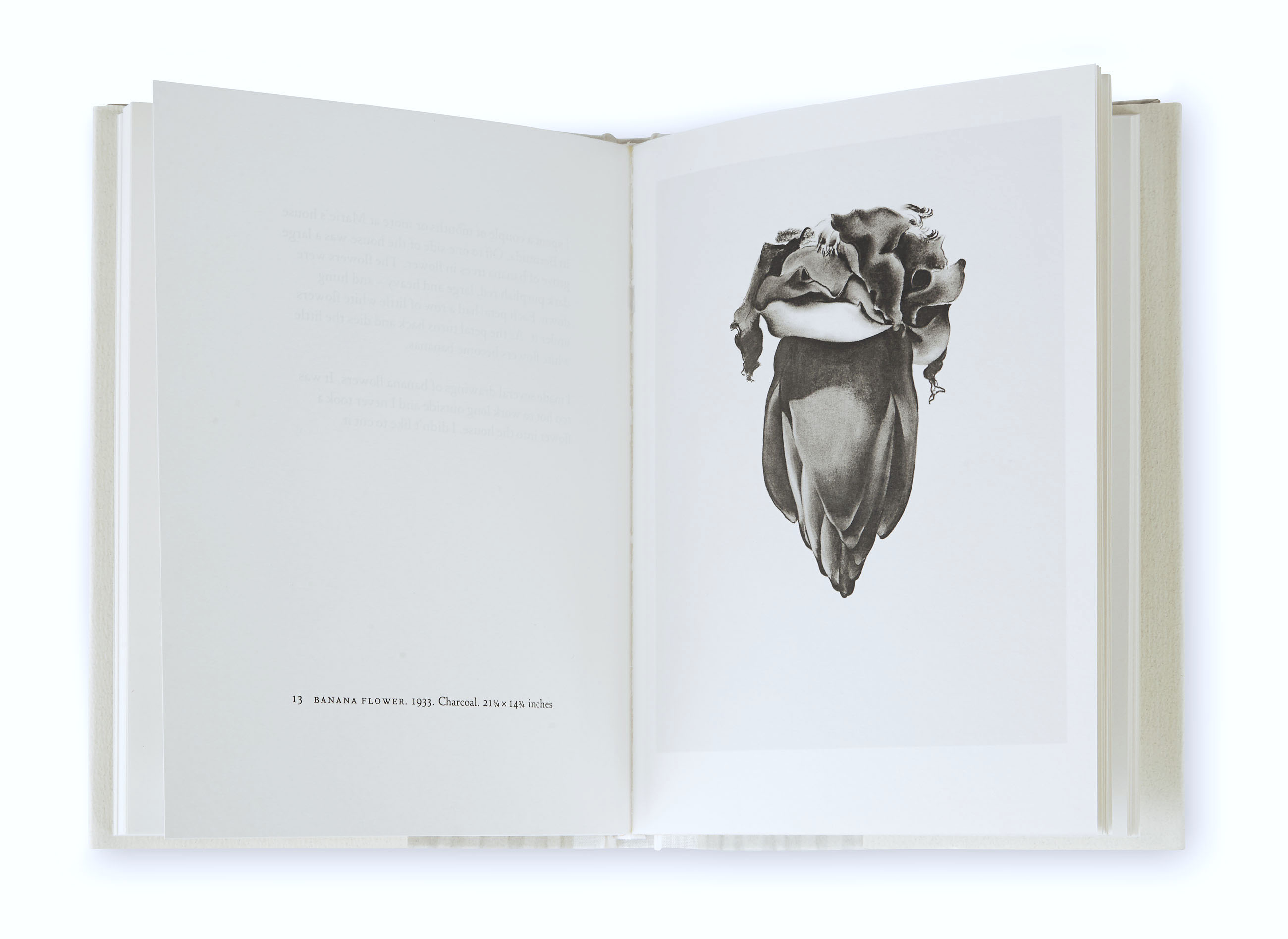
    I began the tiny Some Memories of Drawings within a few minutes of checking it out and quickly devoured it. A beautiful little collection of drawings by O’Keeffe accompanied by her reflections upon each drawing. Some of her observations are very open and insightful, while others retain some mystery, and I personally like it better that way. We don’t need to know every little thing she was thinking about every little thing she created. It is a lovely little treasure of a book that I’ve added to my Wish List– would be a wonderful thing to just pick it up and reflect on her words about these drawings from time to time.


    page from Some Memories; I remember doing a master sketch of this drawing in college

    found here

    The other book, Painting with O’Keeffe by John Poling, intrigued me with its title– I hadn’t been aware that O’Keeffe had ever had the need for studio assistants to help her with painting later in life and I began it eager to learn any insight I could into her studio process.

    O’Keeffe lost much of her eyesight in the early seventies and had stopped painting almost altogether. According to the book, she’d tried painting with her secretary/studio assistant, Juan Hamilton, but neither had found the process enjoyable or successful. Hamilton hired a young John Poling in 1975 to paint trim at the Ghost Ranch house and he soon found himself doing other errands and chores, eventually striking up what seemed like a genuine friendship with O’Keeffe. From his account, she seemed comfortable with him and he, not being an artist himself, was eager to please and very teachable.

    I greatly enjoyed his descriptions of the days spent painting under O’Keeffe’s direction, gaining insight into just how very meticulous and thought out her work was– something we don’t often associate with abstract painters.

    His painting work with her was completed while Juan Hamilton was away in New York on business, and according to Poling, the relationship fell apart upon Hamilton’s return. He attempted to assist O’Keeffe again, but claimed it was not the same “collaborative” type of exchange it had been the first time. When the completed painting was shown, Poling was upset that there was no acknowledgement of his involvement. This is where I’m afraid the book gets a bit whiny and self-involved, showing Poling’s lack of understanding of how artists and their studio assistants have functioned for centuries. He thought he was due credit as a collaborator, where O’Keeffe saw him as “merely a tool”– she only used his hands and eyes because of her unreliable eyesight. His continued insistence on “the truth” being made known comes across as petty and petulant, I’m afraid, although he claims it is with completely altruistic intentions that he wanted his involvement made known. It did seem, though, that he genuinely cared for O’Keeffe and was deeply hurt by what he saw as a betrayal by her and Hamilton.  I know there has been much made of her relationship with Hamilton, and admit I haven’t read much about their relationship until now.  I usually prefer to stick to accounts of artist’s professional lives, especially studio processes, and that part of the book I enjoyed immensely.

    If you happen to see this little book for sale or at your local library, do pick it up, if only for the look into O’Keeffe’s process and her way of life in her later years. If you’ve done the Abiquiu house tour (my account of that to come soon!), it will especially help bring to life the descriptions of her home and studio.

    abiquiu house studio, found here

    Images by me unless otherwise indicated.
  • Artsy Reads. The Painter by Peter Heller.

    Artsy Reads. The Painter by Peter Heller.

    I’ve been reading mostly artist and art professionals biographies lately, but I do love a beefy novel, especially one in which an artist is the central character.  So when I was offered a copy of The Painter by Peter Heller for review, I jumped at the chance!

    This was not only my first novel in a while, but also the first I’ve read of any of Heller’s work.  The Painter is, on the surface, the story of a man battling his own demons, creating chaos and tragedy in his wake, but finding a version of peace in the end.  But it is also a portrait of an artist– all his flaws, his humanity, and how he works through his story with paint on canvas.

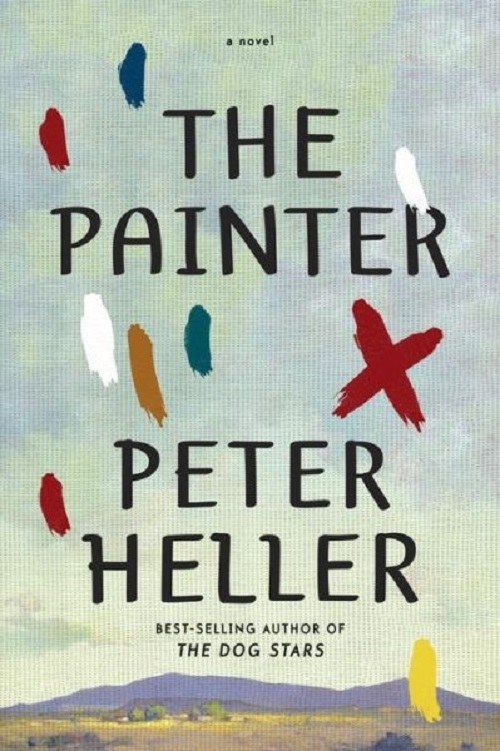
    Heller_The painter cover


    In the beginning, the narrator and main character Jim Stegner ( loosely based on Taos artist Jim Wagner ) painting himself swimming in an ocean of women.  As the story moves on, the paintings move into darker places, nearly exploding from his hand in a need to make sense of what is happening.  The narrative is mostly a succinct, Hemingwayesque style but it is in those painting passages that I got the most caught up.

    Heller’s story of creating chaos and finding peace, for me, takes a back seat to his portrait of the painter.  Those long descriptions of the way a painting comes to being– from the formation of an idea, the need to bring it to canvas, sketching out the idea, then becoming completely absorbed by bringing it to life and not even realizing what you’ve done until it is all over– will ring true and familiar for anyone who has ever painted from the soul.

    The Painter is a gripping story and authentic depiction of the conflict of the artist and the world in which he lives.  Alas, as we travel, I can’t carry too many books around!  If you think you’d enjoy reading The Painter  post your favorite artist biography in the comments and I’ll draw a name this Friday 3.27.15 and send my copy to the winner!  US residents, only, please.

  • Artsy Reads: The Girl With the Gallery

    Artsy Reads: The Girl With the Gallery

    Hello my fellow Artsy bookworms!  This is going to be a quick Artsy Reads as I’m busy with freelance work this week ( yay! ).  The Girl With The Gallery by Lyndsay Pollock, is a biography of early twentieth century New York gallerist Edith Gregor Halpert, who at just twenty-six years old founded the successful Downtown Gallery where she cultivated the careers of American modern artists like Arthur Dove, Stuart Davis, and Jacob Lawrence.

    AR_The Girl with the Gallery book shot

    Reading almost like a novel, the biography follows Halpert’s life from her childhood in Russia to become wife and muse to artist Sam Halpert, to the founding of one of Greenwich Village’s first galleries, her art world rise and dogged devotion to the artists she represented.

    AR_Stuart Davis

    stuart davis found here

    AR_OKeeffe

     georgia o’keeffe found here

    What I found most intriguing about Halpert’s story was the many modern day gallery practices  that she innovated in the late 1920s and 30s.  Methods like creating a home-like gallery environment, selling furnishings alongside artwork, and creating a community atmosphere within the gallery walls, as well as diversifying her gallery offerings during the Depression by building a market for American Folk Art, just as many galleries now sell items such as fine crafts alongside paintings and sculpture.

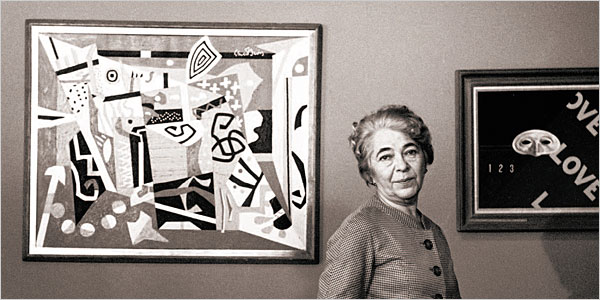
    AR_Halpert by Sam Falk NYT 1964


    photo by sam falk, new york times 1964 found here


    If you’re intrigued by the early American modern art movement, the New York gallery world or just the running of a gallery in general, this will be a fascinating read for you.  Though Ms. Halpert’s life took a tragic turn, her story is nonetheless riveting and proof that women were brokering power in the art world long before the Feminist Movement.

    Top image by Artsy Forager, all other image sources linked above.

  • Artsy Reads: Tom and Jack by Henry Adams

    Artsy Reads: Tom and Jack by Henry Adams

    I have always been a voracious reader, nerd that I am.  Summers were often spent with my nose in a book and summer reading contests were usually won handedly.  These days, with so much time spent reading blogs and articles online, I don’t pick up a book nearly as often as I’d like.  When I do, sometimes it’s an artist biography or other art/art history related tome, with the occasional fun & easy fiction read thrown in.  Since some of my artsy reads might be of interest to you, I thought I’d begin posting my thoughts on my latest conquests.

    Best reading spot ever

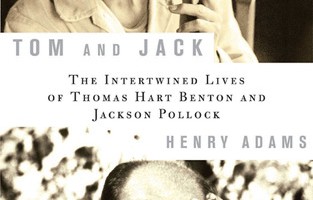
    My most recent artsy read has been Tom and Jack: The Intertwined Lives of Thomas Hart Benton and Jackson Pollock by Henry Adams.  Many of us know that Pollock was a student of Benton, but this book really delves into both their lives and careers, their complicated relationship and the influence of each on the development of modern art.

    Tom and Jack: The Intertwined Lives of Thomas Hart Benton and Jackson Pollock by Henry Adams

    While I’ve always admired Thomas Hart Benton’s work for its sweeping nature and subtly satirical voice ( though it is still widely criticized by many as too provincial ), I’ll admit my main draw to the book was Pollock.

    Arts of the West ( 1932 ) by Thomas Hart Benton

    Remembering back to my earliest forays into art history, I wasn’t especially intrigued by Pollock.  At the time, I was drawn to the more feminine abstractions of Georgia O’Keeffe and Helen Frankenthaler.  It wasn’t until I came face to face with a Pollock canvas during an Abstract Expressionism show at The Cummer Museum of Art in Jacksonville.   I was completely blown away.

    Convergence by Jackson Pollock ( 1952 ), oil on canvas, 155×93.5

    The texture, the seemingly randomness that once you really stare at it, is not so random, the thick build-up of paint.. I was now officially hooked.  The book details the rise of Thomas Hart Benton, paying special attention to his influences, as these would trickle down to ultimately influence Pollock.  Benton’s theory of “the hollow and the bump” becomes especially important to Pollock’s artistic growth.  Once studied side by side, it’s interesting to map how Pollock went from devoted student of Benton’s to the development of his own unique, groundbreaking style while still utilizing theories taught to him by this mentor and father figure.

    I confess, this one took me several library renewals to get through..  The first half of the book, which focuses heavily on Benton and his contemporaries is a bit of a challenge, perhaps because I was more interested in Pollock.  But once you begin to see it all culminating in the explosion of Pollock’s career, the transition from the Modern movement to Abstract Expressionism and the shifting of the center of the art world from Paris to New York, the book is impossible to put down.  Yes, there’s plenty of speculation regarding Pollock’s alcoholism, mental and emotional battles, but the focus comes back to how he dealt with those demons through his work.  A fantastic read if you are at all interested in modern art, abstract expressionism, Benton or Pollock.  I just wish I’d bought it instead of checking it out of the library!

    Anyone else out there read this book?  What were your thoughts?

    PS– If you have any recommendations for artsy reads, please share!  Right now, I’m really enjoying Steve Martin’s An Object of Beauty.  Thoughts on that one to come soon!  You can see more of my reading list on my Artsy Book Club Pinterest board. 😉