Tag: books

  • Reading. Painting with O’Keeffe plus 1.

    Reading. Painting with O’Keeffe plus 1.

    I set out on our Southwestern road trip determined to finish 2 books I’ve been stopping and starting for a while now. I was making good progress until we got to Ghost Ranch and I saw their library! One of the best selections I’ve seen of books on Georgia O’Keeffe and art in general, I found myself wishing we were staying longer.  I only had 6 days at the ranch, so I chose 2 small books I knew I could finish in that time frame.

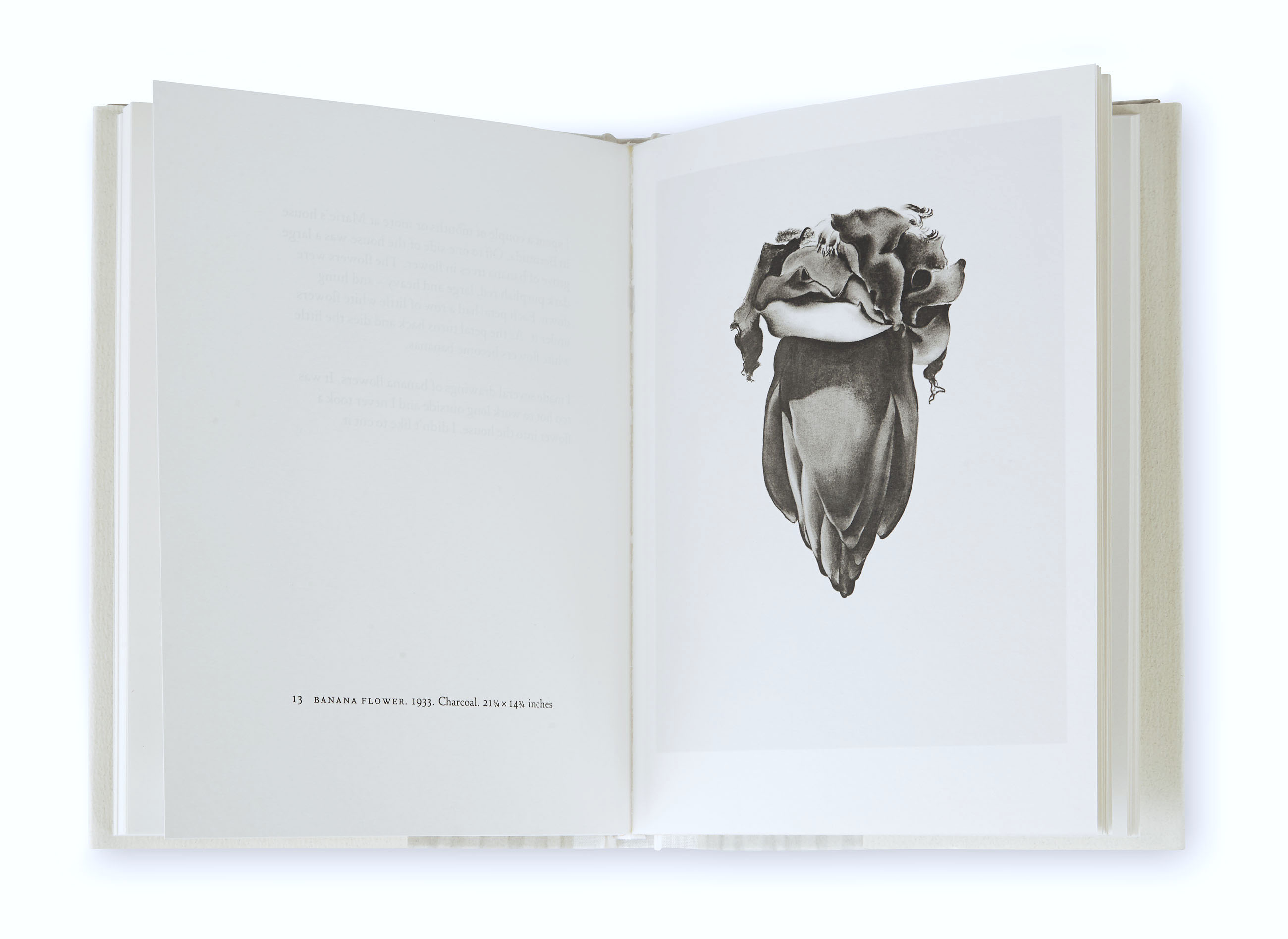
    I began the tiny Some Memories of Drawings within a few minutes of checking it out and quickly devoured it. A beautiful little collection of drawings by O’Keeffe accompanied by her reflections upon each drawing. Some of her observations are very open and insightful, while others retain some mystery, and I personally like it better that way. We don’t need to know every little thing she was thinking about every little thing she created. It is a lovely little treasure of a book that I’ve added to my Wish List– would be a wonderful thing to just pick it up and reflect on her words about these drawings from time to time.


    page from Some Memories; I remember doing a master sketch of this drawing in college

    found here

    The other book, Painting with O’Keeffe by John Poling, intrigued me with its title– I hadn’t been aware that O’Keeffe had ever had the need for studio assistants to help her with painting later in life and I began it eager to learn any insight I could into her studio process.

    O’Keeffe lost much of her eyesight in the early seventies and had stopped painting almost altogether. According to the book, she’d tried painting with her secretary/studio assistant, Juan Hamilton, but neither had found the process enjoyable or successful. Hamilton hired a young John Poling in 1975 to paint trim at the Ghost Ranch house and he soon found himself doing other errands and chores, eventually striking up what seemed like a genuine friendship with O’Keeffe. From his account, she seemed comfortable with him and he, not being an artist himself, was eager to please and very teachable.

    I greatly enjoyed his descriptions of the days spent painting under O’Keeffe’s direction, gaining insight into just how very meticulous and thought out her work was– something we don’t often associate with abstract painters.

    His painting work with her was completed while Juan Hamilton was away in New York on business, and according to Poling, the relationship fell apart upon Hamilton’s return. He attempted to assist O’Keeffe again, but claimed it was not the same “collaborative” type of exchange it had been the first time. When the completed painting was shown, Poling was upset that there was no acknowledgement of his involvement. This is where I’m afraid the book gets a bit whiny and self-involved, showing Poling’s lack of understanding of how artists and their studio assistants have functioned for centuries. He thought he was due credit as a collaborator, where O’Keeffe saw him as “merely a tool”– she only used his hands and eyes because of her unreliable eyesight. His continued insistence on “the truth” being made known comes across as petty and petulant, I’m afraid, although he claims it is with completely altruistic intentions that he wanted his involvement made known. It did seem, though, that he genuinely cared for O’Keeffe and was deeply hurt by what he saw as a betrayal by her and Hamilton.  I know there has been much made of her relationship with Hamilton, and admit I haven’t read much about their relationship until now.  I usually prefer to stick to accounts of artist’s professional lives, especially studio processes, and that part of the book I enjoyed immensely.

    If you happen to see this little book for sale or at your local library, do pick it up, if only for the look into O’Keeffe’s process and her way of life in her later years. If you’ve done the Abiquiu house tour (my account of that to come soon!), it will especially help bring to life the descriptions of her home and studio.

    abiquiu house studio, found here

    Images by me unless otherwise indicated.

  • Reading. Through The Flower.

    Reading. Through The Flower.

    It’s been a bit since I’ve shared what I’m reading with you!  I just finished Judy Chicago’s Through The Flower and wanted to share some quick thoughts I took from her early experiences as a female artist.

    81297f591d5c000320a512ee6ded3712

    If you see a need, fill it.

    Womanhouse

    image found here

    Frustrated with the patriarchal structure of the art world, in 1970 Chicago took a faculty position with Fresno State College to teach a women-only art program.  The groundbreaking Feminist Art Program provided female artists a platform for creating artwork specific to their experiences as women.  

    Know the past to find the future.

    Judy-Chicago-The-Dinner-Party

    the dinner party, 1974-1979

    image found here 

    For several years, Chicago immersed herself in the study of other female artists working in abstraction.  There is truly nothing new under the sun, but looking back at how other women created and functioned in the male dominated world (both the art world and the world at large) helped give the artist the confidence and commitment to create her own visual language and tradition.

    Be true to you.

    9692768.0

    queen victoria, 1972

    image found here 

    In her early years, Chicago heard a professor tell her class that women had made no contributions to art history.  This, along with a sense of equality and justice instilled by her father, propelled her to work tirelessly not only to become an important artist but to become an important, inherently feminine artist.  Chicago’s style of feminism is very direct, while the work of other female artists can be more subtle.  

    As an artist, I find myself feeling like I should be making important statements with my work.  But as a person, I’ve never been one for overt statements, though I have definite opinions.  Over time, Chicago found her voice.  I hope to do the same.

    Top image by me.  Other image sources linked above.


  • Artsy Reads. The Painter by Peter Heller.

    Artsy Reads. The Painter by Peter Heller.

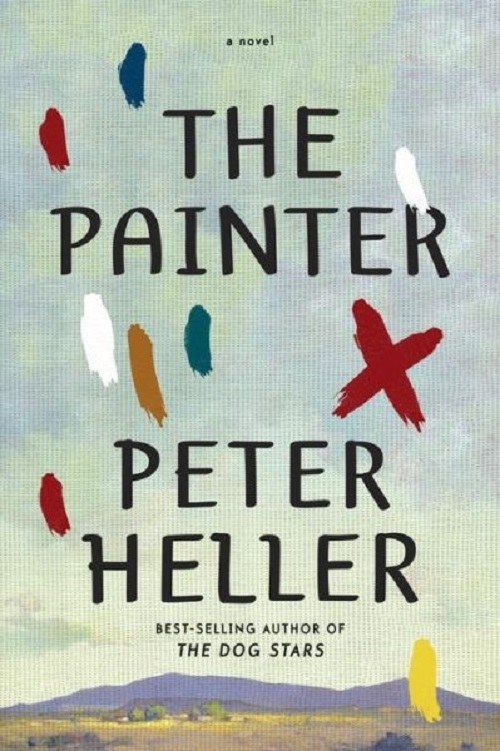
    I’ve been reading mostly artist and art professionals biographies lately, but I do love a beefy novel, especially one in which an artist is the central character.  So when I was offered a copy of The Painter by Peter Heller for review, I jumped at the chance!

    This was not only my first novel in a while, but also the first I’ve read of any of Heller’s work.  The Painter is, on the surface, the story of a man battling his own demons, creating chaos and tragedy in his wake, but finding a version of peace in the end.  But it is also a portrait of an artist– all his flaws, his humanity, and how he works through his story with paint on canvas.

    Heller_The painter cover


    In the beginning, the narrator and main character Jim Stegner ( loosely based on Taos artist Jim Wagner ) painting himself swimming in an ocean of women.  As the story moves on, the paintings move into darker places, nearly exploding from his hand in a need to make sense of what is happening.  The narrative is mostly a succinct, Hemingwayesque style but it is in those painting passages that I got the most caught up.

    Heller’s story of creating chaos and finding peace, for me, takes a back seat to his portrait of the painter.  Those long descriptions of the way a painting comes to being– from the formation of an idea, the need to bring it to canvas, sketching out the idea, then becoming completely absorbed by bringing it to life and not even realizing what you’ve done until it is all over– will ring true and familiar for anyone who has ever painted from the soul.

    The Painter is a gripping story and authentic depiction of the conflict of the artist and the world in which he lives.  Alas, as we travel, I can’t carry too many books around!  If you think you’d enjoy reading The Painter  post your favorite artist biography in the comments and I’ll draw a name this Friday 3.27.15 and send my copy to the winner!  US residents, only, please.

  • Artsy Reads: The Girl With the Gallery

    Artsy Reads: The Girl With the Gallery

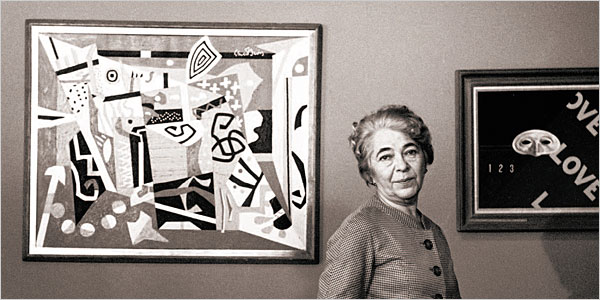
    Hello my fellow Artsy bookworms!  This is going to be a quick Artsy Reads as I’m busy with freelance work this week ( yay! ).  The Girl With The Gallery by Lyndsay Pollock, is a biography of early twentieth century New York gallerist Edith Gregor Halpert, who at just twenty-six years old founded the successful Downtown Gallery where she cultivated the careers of American modern artists like Arthur Dove, Stuart Davis, and Jacob Lawrence.

    AR_The Girl with the Gallery book shot

    Reading almost like a novel, the biography follows Halpert’s life from her childhood in Russia to become wife and muse to artist Sam Halpert, to the founding of one of Greenwich Village’s first galleries, her art world rise and dogged devotion to the artists she represented.
    AR_Stuart Davis

    stuart davis found here

    AR_OKeeffe

     georgia o’keeffe found here

    What I found most intriguing about Halpert’s story was the many modern day gallery practices  that she innovated in the late 1920s and 30s.  Methods like creating a home-like gallery environment, selling furnishings alongside artwork, and creating a community atmosphere within the gallery walls, as well as diversifying her gallery offerings during the Depression by building a market for American Folk Art, just as many galleries now sell items such as fine crafts alongside paintings and sculpture.

    AR_Halpert by Sam Falk NYT 1964


    photo by sam falk, new york times 1964 found here


    If you’re intrigued by the early American modern art movement, the New York gallery world or just the running of a gallery in general, this will be a fascinating read for you.  Though Ms. Halpert’s life took a tragic turn, her story is nonetheless riveting and proof that women were brokering power in the art world long before the Feminist Movement.

    Top image by Artsy Forager, all other image sources linked above.

  • Artsy Reads: Lessons Learned from Lee Krasner

    Artsy Reads: Lessons Learned from Lee Krasner

    It seems a long while since I shared thoughts on my latest artsy read!  As a woman, it does follow that I’ve always been interested in the female artists who’ve made their marks on art history.  But lately, I’d been especially intrigued by a female artist who hated being gender labeled, but whose career trajectory veered a bit off course, thanks to becoming a wife.  Mrs. Jackson Pollock aka abstract expressionist artist Lee Krasner.

    In her biography of Krasner, Gail Levin  introduces us to a fiercely independent, sensual, and opinionated young woman who would become one of the founding members of the Abstract Expressionist movement.  She would be eclipsed for much of her career not just by the talent, personality and notorious nature of her husband, but by the sexist leanings of the modern mid-century art world, eventually winning for herself the respect and recognition she so deserved.

    What struck me most, when reading Levin’s account and Krasner’s own words, were her formidable strength when opposed, yet tenderness, graciousness, and respect reserved for the man she willingly sacrificed for.  I found myself dog-earing pages so that I could go back and take in her words again.  This artist who was always studying, taught me some valuable lessons.

    1 | buck tradition.

    Krasner collage1

     found here and here

    This young girl, raised in a traditional Russian Orthodox Jewish home, early on saw the inequities in her familial religion, soon relinquishing its hold.  She fought against tradition when expected to marry her widowed brother-in-law after her older sister died.  But she remained true to her fiercely independent self and her desire to become an artist.  She spoke out against inequalities and injustices whenever she recognized them.  At a time not long following women finally gaining the right to vote, Krasner was a leader among early abstract painters.

    2 | recognize and nurture greatness in others. 

    Krasner collage2

     found here and here

    I think few who knew her would describe Krasner as humble.  Yet, she recognized, supported and nurtured the talent in her husband.  She was his biggest fan and champion, and after his death, the manager of his estate.  She describes being “blown away” by first seeing his work.  She had a great deal of respect for her husband’s artistic mind and sensibilities, bolstering his career while still working away on her own.  When it was speculated that Krasner may have acted differently had she & Pollock gotten together in the age of feminism, she maintained, “I think I would do the same, identical thing all over again in the presence of talent like that..

    3 | don’t be afraid to share the spotlight or even give it up for a while.

    Krasner collage3

    found here here and here

    In Levin’s biography, it is intimated often that Krasner believed Pollock to be the greater artist.  She was confident in her own talent and work, and yet she recognized and respected his genius.  “Painting is revelation, an act of love.  There is no competitiveness in it.  As a painter, I can’t experience it any other way.”, Krasner said when asked about the prejudice she’d experienced as Pollock’s wife.  She worked away on her own, building her own portfolio and figuring out her own visual language, while allowing Pollock to shine.  Her time would eventually come.

    4 | fight for what is rightfully yours.

    Krasner collage4

    found here and here

    Krasner wasn’t afraid to fight for the recognition she deserved as an artist and member of the Abstract Expressionist movement.  She knew her place in art history wasn’t merely being the wife of an important painter.  She rightly believed she was a noteworthy artist in her own stead and, with the advent of the feminist movement and the increased interest in female artists, she was finally given the respect and recognition she deserved.  She never once wavered in her steadfast belief that she was an good an artist as any of the male artists of her time which were so widely adored.

    5 | never stop learning. 

    Krasner collage5

    found here and here

    Before Krasner’s retrospective show opened at the Museum of Fine Arts in Houston, the artist chose to keep one finished painting so that she could have it at home to study.  “I wanted to keep the one I just finished because I need to have my work to look at.  Even when I’m just looking; I am working.” 

    Here was a modern female painter, who though overshadowed by the enormous talent of her husband, quietly produced a body of work that holds its own alongside any of her contemporaries.  She was no shrinking violet, to be sure and her place in art history as someone other than the wife of Jackson Pollock was hard won.  Yet never saw herself in competition with him.  He was an artist.  So was she.  That was enough.

    You can find Gail Levin’s Lee Krasner, A Biography on amazon.com or in many libraries and bookstores.  I finished this book enlightened and inspired.  I think you will be, too.

    All image sources linked above.

  • Crystallized Imagination: Alexis Arnold

    Crystallized Imagination: Alexis Arnold

    As Mr. Forager & I go through our belongings, deciding what goes with us and what stays behind, one of the hardest things to part with have been books.  Even as my family was packing up our Florida storage, it was so difficult to say “don’t ship it” to my books.  But it feels like we have less and less time for reading these days.  In fact, when I came upon these crystallized book sculptures by San Francisco artist Alexis Arnold, they reminded me of what my own mind feels like sometimes, having grown frozen from under-utilization!

    Post Mortem by Alexis Arnold
    Post Mortem, book, Borax crystals, 7x9x5
    Cookbook by Alexis Arnold
    Cookbook, book, Borax crystals, 9x6x6.5

    Reading stimulates the brain in ways other activities just don’t provide.  If you’re like me, you actually feel differently when reading a book than you do when reading online or even a magazine.  I feel like my mind is more engaged, more completely consumed than I do with any other type of reading.

    San Francisco Magazine by Alexis Arnold
    San Francisco Magazine, magazine, Borax crystals, 11x6x5.5
    The Catcher in the Rye by Alexis Arnold
    The Catcher in the Rye, book, Borax crystals, 7x5x3

    But for some reason, I just haven’t been compelled to pick up a book lately.  I’ve been known to devour books within a few days time.  Lately, though, in the evenings, normally prime reading time, I find myself reaching for my iPad instead, using the time to catch up on blogs or social media.  Maybe it’s because I don’t have a super comfy reading spot in this apartment.  Or maybe it’s because we only have overhead lighting ( which I hate! ), so there isn’t a cozy, makes-me-want-to-curl-up-and-read atmosphere.

    Allure by Alexis Arnold
    Allure, magazine, Borax crystals, 11x12x3.5

    These are all just excuses.  I am now adding an item to my to-do list: READ.  Not blogs, not social media.  A real live, smells like musty paper book.  I will do it!  Soon.

    Want to see more of Alexi Arnold’s work?  Check out her website.  Anyone else suffering from book withdrawal?

  • Design Foraging: Rainy Day Artsy

    Design Foraging: Rainy Day Artsy

    When we arrived in Seattle and pretty much for the last few weeks, the weather has been glorious.  As in uncharacteristic bright skies and unseasonable warmth.  At first we thought it some kind of cosmic joke– we’d left Florida, then most recently the California desert, to escape the heat, thinking we’d be safe from it in Seattle..  But we found that we didn’t flee in vain.  The grey skies, soft drizzle and cool temperatures returned this week, leaving me ready for a quiet day spent doing rainy day fun.  Here are a few artsy essentials I found to aid in the soggy fun!

    Delicious: The Life and Art of Wayne Thiebaud
    Delicious: The Life and Art of Wayne Thiebaud

    find it here

    Print Burst Umbrella
    Print Burst Umbrella

    find it here

    Emobossed Dots Mug
    Emobossed Dots Mug

    find it here

    Cavez Rain Boot
    Cavez Rain Boot

    find it here

    Mosaic Dots Tote
    Mosaic Dots Tote

    find it here

    On damp days, we love to sit for hours in a coffee shop, chatting and reading.  Mr. F likes to tour breweries ( that’s on sunny days, too 😉 ) and I love to spend rainy afternoons wandering around a favorite art museum.  What are some of your favorite activities for the days of grey?

    All images linked above.

  • Delicate Revelations: Lisa Occhipinti

    Delicate Revelations: Lisa Occhipinti

    In our current gypsy-like state, Mr. Forager and I try to travel as lightly as possible.  But we do acquire things along the way, some we find unnecessary, contributing to a local Goodwill every where we go, but others we hold onto tightly– art and books.  Small pieces of our own art enrich each temporary home, while the books we carry with us enrich our minds, spirits, and souls.  The work of Southern California artist Lisa Occhipinti centers around books, not just their physical pages but our emotional and spiritual connection to them.

    Perfect Balance by Lisa Occhipinti
    Perfect Balance, mixed media, 12×24

    The artist incorporates pages from various tomes in her work, sometimes in a conspicuous way, like the pretty coffee table books we may buy but never really read.. or in a more subtle way, like the self-help books and other guilty pleasures we keep hidden in the nightstand.

    Un Voyage Comique by Lisa Occhipinti
    Un Voyage Comique, mixed media, 24×36
    Note on the Type by Lisa Occhipinti
    Note on the Type, mixed media, 12×12

    Delicate drawings and inky washes call to mind margin notes and doodles peppering well read stories.  Almost as if the reader of Occhipinti’s visual story is distracted not because the story doesn’t hold their interest, but they lost in becoming a part of the tale being told.

    Sargasso by Lisa Occhipinti
    Sargasso, mixed media, 36×48

    To see more of Lisa Occhipinti’s work, please visit her website.  I chose to focus on her painting work, but you’ll also find wonderful book-y sculptures and photography on her site.

    All images are via the artist’s website.

  • Artsy Reads: Tom and Jack by Henry Adams

    Artsy Reads: Tom and Jack by Henry Adams

    I have always been a voracious reader, nerd that I am.  Summers were often spent with my nose in a book and summer reading contests were usually won handedly.  These days, with so much time spent reading blogs and articles online, I don’t pick up a book nearly as often as I’d like.  When I do, sometimes it’s an artist biography or other art/art history related tome, with the occasional fun & easy fiction read thrown in.  Since some of my artsy reads might be of interest to you, I thought I’d begin posting my thoughts on my latest conquests.

    Best reading spot ever

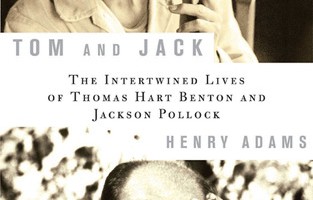
    My most recent artsy read has been Tom and Jack: The Intertwined Lives of Thomas Hart Benton and Jackson Pollock by Henry Adams.  Many of us know that Pollock was a student of Benton, but this book really delves into both their lives and careers, their complicated relationship and the influence of each on the development of modern art.

    Tom and Jack: The Intertwined Lives of Thomas Hart Benton and Jackson Pollock by Henry Adams

    While I’ve always admired Thomas Hart Benton’s work for its sweeping nature and subtly satirical voice ( though it is still widely criticized by many as too provincial ), I’ll admit my main draw to the book was Pollock.

    Arts of the West ( 1932 ) by Thomas Hart Benton

    Remembering back to my earliest forays into art history, I wasn’t especially intrigued by Pollock.  At the time, I was drawn to the more feminine abstractions of Georgia O’Keeffe and Helen Frankenthaler.  It wasn’t until I came face to face with a Pollock canvas during an Abstract Expressionism show at The Cummer Museum of Art in Jacksonville.   I was completely blown away.

    Convergence by Jackson Pollock ( 1952 ), oil on canvas, 155×93.5

    The texture, the seemingly randomness that once you really stare at it, is not so random, the thick build-up of paint.. I was now officially hooked.  The book details the rise of Thomas Hart Benton, paying special attention to his influences, as these would trickle down to ultimately influence Pollock.  Benton’s theory of “the hollow and the bump” becomes especially important to Pollock’s artistic growth.  Once studied side by side, it’s interesting to map how Pollock went from devoted student of Benton’s to the development of his own unique, groundbreaking style while still utilizing theories taught to him by this mentor and father figure.

    I confess, this one took me several library renewals to get through..  The first half of the book, which focuses heavily on Benton and his contemporaries is a bit of a challenge, perhaps because I was more interested in Pollock.  But once you begin to see it all culminating in the explosion of Pollock’s career, the transition from the Modern movement to Abstract Expressionism and the shifting of the center of the art world from Paris to New York, the book is impossible to put down.  Yes, there’s plenty of speculation regarding Pollock’s alcoholism, mental and emotional battles, but the focus comes back to how he dealt with those demons through his work.  A fantastic read if you are at all interested in modern art, abstract expressionism, Benton or Pollock.  I just wish I’d bought it instead of checking it out of the library!

    Anyone else out there read this book?  What were your thoughts?

    PS– If you have any recommendations for artsy reads, please share!  Right now, I’m really enjoying Steve Martin’s An Object of Beauty.  Thoughts on that one to come soon!  You can see more of my reading list on my Artsy Book Club Pinterest board. 😉

  • By the Book: Stanford Kay

    By the Book: Stanford Kay

    I don’t always read Artist Statements but sometimes one just describes the artist’s work and vision so perfectly that I don’t feel like there is any way my words can improve upon it.  Such is the case of New York artist Stanford Kay.  His artist statement was so completely lovely, I’d like to let him speak for his own work.

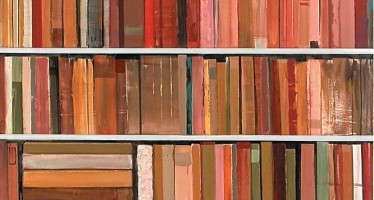
    What I Know About Her, acrylic on canvas, 50×60

    “At first, there is paint and desire. Paint is applied, removed, and applied again.  It makes suggestions. It is edited without mercy. The image and the need to signify arrive later. Books as images within these paintings offer formal modernist possibilities while also serving as an embodiment of content.”

    Bacillus, acrylic on canvas, 36×40
    Secret Passage, acrylic on canvas, 36×40
    “Both paintings and books are vessels for ideas, experience and memory.  The books we read and the paintings we love and choose to live with, 
    define us.  A book requires the reader to assemble images and ideas out of its signs and symbols. Likewise, a painting asks that you translate its strokes and drips into reason and emotion.” — Stanford Kay
    Legends of the West, acrylic on canvas, 36×48

    To see more of Stanford Kay’s work, please visit his website.  Doesn’t his work make you want to cozy up in a library and read all day?

    Featured image is What I Know About Her ( detail ).  All images are via the artist’s website.