Tag: museums

  • Masterworks Monday: Madame X

    Masterworks Monday: Madame X

    She has been a source of fascination, scandal and intrigue for over a century.

    Madame X, 1884

    John Singer Sargent’s masterpiece, Madame X, while initially a source of pain and frustration to the artist, proved to be his most recognizable and memorable work.  The portrait’s subject, Virginie Amelie Avegno Gautreau, was a Paris socialite renown for her beauty and though it is a remarkably beautiful work to contemporary audiences, at the time of its Paris salon debut, the portrait was greatly criticized by critics, the public and Gautreau’s family ( her mother was outraged ).

    The characteristics that appeal to our modern eyes are some of the same characteristics by which it was condemned upon its debut.  The elegant lines of her simple black dress create a decidedly contemporary feel to Madame Gautreau’s ensemble, but this would be years before Coco Chanel’s “little black dress” would become ubiquitous with timeless fashion.  The expanse of almost translucent white skin may not seem provocative to our 21st century eyes, to show such a sweep of bare skin, especially the beautifully turned neck and decolletage would have been quite provocative in 1884.  Though artists had long been painting nudes of mythical and fictional figures, showcasing the body of a real person in such a seductive way would have been scandalous.  ( Even if said person was infamous for her infidelities.. ).

    Madame X, detail

    The most scandalous component of all though may be her dress strap.  The strap as pictured above laying rightfully upon her shoulder is not how Sargent originally painted it.  In looking at his sketches for the portrait, it would seem that her strap had a tendency to slip off her shoulder..

    Sketches for Madame X

    So, painting the truth in beauty, Sargent originally depicted the strap as having fallen casually from Gautreau’s shoulder.

    Madame X, recreated as may have originally been painted

    This detail caused such a backlash, that when Sargent picked the painting up after the Salon showing, he took it back to the studio and repainted the strap well stationed upon her shoulder.  Despite the outrage the painting incited when it was first shown,  Sargent would eventually come to realize the importance of the portrait, describing it in a letter to the director of the Metropolitan Museum of Art as “..the best thing I have ever done”.  He would sell it to the museum in 1916 and it is there that I saw it in person in 2007 during the “Americans in Paris” exhibition.  Photographs online do not do this painting justice in any way.  In person, it is commanding in scale, mesmerizing in presence and breathtaking in beauty.
  • My Husband GETS Abstract Art.. finally

    My Husband GETS Abstract Art.. finally

    My hubby is a very intelligent and creative person in his own way– the stories he concocts and “sketches” he comes up with are Saturday Night Live-worthy and he reads books like A People’s History of the United States for fun.  But when we started dating, he was definitely an art-world novice.  Questions like, “But what exactly is wrong with Thomas Kinkade?” made my head want to explode.  But maybe the biggest struggle was trying to explain what I loved so much about abstract painting and why no, honey, a 3rd grader could NOT have done that.

    George checking out Rauschenberg

    Part of what I love about George is how much he appreciates my creative side and artsiness.  Makes me more interesting than the average-gal, I suppose.  And, like all lovey-dovey types, I wanted to be able to share that part of myself with him.  We went to art festivals, galleries and openings, all in pursuit of awakening his mind to a world of art he may have never experienced before.  He became a fan of Christina Foard, following the opening of her Williams-Cornelius show, admiring her use of color and texture.

    Moonlight Solitude by Christina Foard

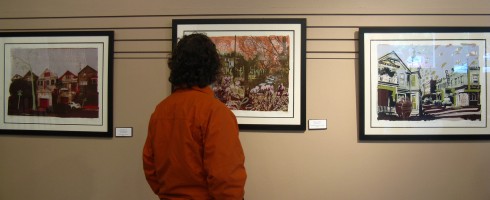
    We also discovered that he doesn’t always care for abstract expressionist-type work, i.e., seemingly random slashes of paint across a canvas, which will more than likely elicit a shoulder-shrug and a “eh” from him.  He does, however, appreciate light and texture, as he surprised me by totally digging these pieces we saw recently in a gallery in Hood River, Oregon.

    Artist: Barry Mack
    Artist: Barry Mack

    Surprisingly, his tastes have emerged as running a bit more deep & avant-garde than mine.. where I get drawn in by beautiful color, texture and form, what may draw him to a particular work is the narrative of the story it is telling.  For instance, he was very interested in investigating the details of the Rauschenberg prints we saw in Tulsa.  He also tends to lean more toward multi-media work, such as this kind of creepy haunted-house-like part sculpture-part installation at the Denver Art Museum held his interest far longer than it held mine.

    Installation at the Denver Art Museum

    But what really keeps me on my toes is how inquisitive he is about what he is seeing– the process, the motivation, background story, etc.  He asks questions that I don’t always have the answers to, which results in us making discoveries together.  ( Who could ask for better? )  It is that inquisitive & curious nature that I think finally led him to the realization of just what it is about abstract art that makes it so interesting and provocative.

    Admiring the work of Hilary Williams

    As we were leaving the art gallery at The Pines in Hood River, George said to me, “I think I understand why you like abstract art so much.  When you see another realistic painting of a tree or landscape, it’s usually just another painting of a tree.  But abstract art draws you in, makes you think.”  YES!  Here’s to more discoveries with you, my love.

  • Museum Hopping

    Museum Hopping

    Though our time in the cities we visited on our cross-country tour was short, we managed to hit a couple of wonderful, yet very different museums along the way.  In Tulsa, we spent a few hours exploring the Philbrook Museum of Art.

    Front facade of the Philbrook Museum of Art

    My Jacksonville readers will be familiar with the Cummer Museum of Art in Jax.  The Philbrook is, to me, like the Cummer on steroids.  Like the Cummer, the Philbrook was once a private residence, which was donated to the city of Tulsa by its owners, oilman Waite Phillips and his wife Genevieve.  Once we entered the museum doors, we found ourselves in a gorgeous, domed center hall, light streaming through the oculus in the center of the dome.

    Center hall at the Philbrook
    Philbrook oculus

    Just walking the halls of this Renaissance style villa, built in 1927 and designed by architect Edward Buehler Delk for the Phillips as “a place where there two children could entertain friends” ( Imagine the sleepovers you could have! ), is a pleasure in itself.

    Corridor at the Philbrook

    The museum houses a varied and extensive permanent collection of art, ranging from African & Asian collections, Native American art to Italian Renaissance and a surprising and delightful modern collection.

    Bougereau at the Philbrook, a favorite artist of the Frenz’s
    Lovely little Picasso at the Philbrook
    Fabulous modern design collection at the Philbrook

    While the museum collections are enjoyable, it is the museum grounds that really steal the show.  Though we visited on a gray and rainy day, it didn’t stop us from exploring the extensive gardens behind the museum.  The original formal gardens extend from the rear colonnade of the museum down to the tempietto.  Let’s take a little walking tour..

    Rear collonade at the Philbrook
    View from the colonnade down to the tempietto
    Wonderful stepped fountain
    Beautiful, naturalistic water feature
    No formal garden is complete without a koi pond!
    View from the tempietto back toward the museum
    Yours truly in the tempietto ( wouldn’t this be a romantic spot to pop the question? )
    Contemporary sculpture walk beyond the formal gardens

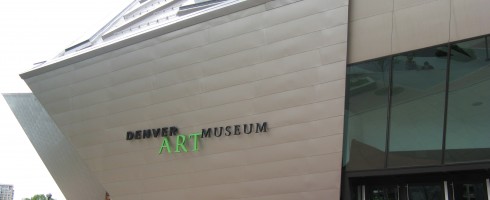
    Let’s switch gears now, fast-forward through another 12 hour day on the road and pay a little visit to Denver.  While in the mile-high city, we spent some time downtown including a tour through the Denver Art Museum.  While the Philbrook is classically ornate, the DAM’s Hamilton Building, where we spent our time, is splendidly contemporary.  Designed by Daniel Lubeskind, the structure represents the Rocky Mountain peaks surrounding Denver.

    Denver Art Museum

    We started at the top and worked our way down, discovering lots of fun & interesting contemporary work along the way.

    Noguchi sculpture and Motherwell painting **Sidenote: Motherwell was born in Aberdeen, WA, the town where we are living for the summer.
    Ceramics at DAM

    Did you notice in the pictures above how the walls are slanted?  The angled walls created a very interesting visual space, especially in the 4th floor gallery where they were prominent.   They were a bit disconcerting when walking down the main stairs, though!

    Artist: Mark Tansey

    We were all fascinated by the piece above, by Mark Tansey.   Another highlight was the Fox Games installation by Sandy Skoglund.  I first saw Skoglund’s work in Jacksonville and am always fascinated by the environments she creates.

    Fox Games by Sandy Skoglund

    And there was just something about “Minotaur with Brushstrokes” that appealed to us.  What can I say, we like work that makes us smile.

    Minotaur With Brushstrokes by Richard Patterson

    Speaking of making us smile, George & I also loved the piece below, although I’m sad to report that I don’t recall the name of the artist.  But it reminded me of spring in the Northwest.

    Kicking myself for not writing down the title & artist for this piece! Anyone have any clues?

    The museum also boasts an impressive Western American Art Collection, as well as African, American Indian, Oceanic, Pre-Columbian and Spanish Colonial Collections.  We toured through the current special exhibition, Cities of Splendor: A Journey Through Renaissance Italy, but alas, no photography allowed in the exhibit, so you’ll have to check out the DAM website for a taste.  As you can see, our art experiences on this trip were widely varied and we are looking forward to more such experiences here in the Northwest.

  • Hands-On vs Hands-Off Artistry

    Hands-On vs Hands-Off Artistry

    In my daily reading of Artinfo.com this morning I came across two articles, seemingly unrelated, until the Facebook comments regarding one of the articles tied them together for me.  The first article, found here, poses the question, “Should Gaudi’s Sagrada Familia Remain Unfinished?”  The Barcelona basilica, begun in 1882 by renown artist-architect Antonio Gaudi is still under construction eighty-five years following the architect’s death.

    Sagrada Familia under construction in Barcelona, Spain

     Though Gaudi left plaster models and drawings, many of his notes were destroyed during the Spanish Civil War, leaving his vision open to interpretation by current sculptors, architects and designers.  While some critics feel the current direction doesn’t jive with Gaudi’s original vision, even during his lifetime, there were many sculptors working on the basilica.  Like any monumental undertaking, “it takes a village” to bring Gaudi’s creation to life.

    Close-up of one of La Sagrada Familia's spires. Barcelona, Catalonia, Spain.

    Should Gaudi’s original design be so open to interpretation?  He gave artistic license to those working under him while alive, would he so object to modern interpretations now being imposed?  Unlike other types of sculpture, cathedrals are often the product of centuries worth of work by multiple architects, artists and craftsman.

    The star-studded ceiling of the east wing of La Sagrada Familia under construction. Barcelona, Catalonia, Spain.

    As Gaudi was aware he would not be alive to see it to completion, wouldn’t he have known his original design would be open to interpretation by those who came after him?  Does the fact that Gaudi is not here to personally oversee the work negate the additions?

    Artists using apprentices and assistants is nothing new.  The art world of the Renaissance era, which produced such celebrated masters as Michelangelo and DaVinci was built upon the concept of apprenticeship.  But what about now?  The second article I read this morning was regarding the approval of a Dale Chihuly museum at the site of a former amusement park in downtown Seattle ( now the Seattle Center ).


    The museum in itself is the subject of controversy, but that isn’t what I’d like to address here.  Instead, I’d like direct attention to another Chihuly controversy– his use of others to craft his designs.  One Facebook poster thought it necessary to point out that since losing the use of his left eye due to a car accident, he is no longer the person actually blowing the art glass he is so famous for.  ( In reality, Chihuly continued to blow glass for three years following the accident, until a body surfing incident dislocated his shoulder, so he was no longer able to manually manipulate the glass ).   The poster’s statement that “His employees make everything.  Just sayin’.” seems to somehow fault Chihuly for continuing to create in the only way he physically could, by having others help him.  The artist himself has said that his role, more of a director, allows him better perspective on the work.

    As stated above regarding Gaudi, the practice of using assistants and apprentices to create monumental works of art has been done for centuries ( and yes, many of Chihuly’s creations are monumental in scope ).  So as long as the artist himself continues to design the creations with his name on them, what’s the big deal?

    And what about so-called “production originals”?  You might be thinking of the ones advertised as “hand painted original works of art”, usually being sold out of a hotel ballroom.  But what I’m talking about are the production art studios– where perhaps one “lead artist” is creating original works of art, which are then being recreated & reproduced by the hand of “assistant artists”.  There are more of these studios around than people realize and the work can be found in galleries, corporate and private collections all over the world.  While the savvy gallerist, art consultant, designer and art afficionado knows production art when they see it, what about the collector who thinks they are buying a true original work of art, only to spot an almost exact replica when in their hotel while on vacation in Hawaii?  Do we lump Chihuly in with these?

    These are three examples of artwork being completed and accomplished without the direct hand of the creator.  What are your thoughts?  Is it ever OK to put your name on something you didn’t actually physically create?  This is definitely a gray area.. would love to hear your thoughts!

  • Masterworks Monday:  Edward Hopper

    Masterworks Monday: Edward Hopper

    Happy Monday, Artsies!  Hope everyone had a wonderful holiday weekend.  This week’s Masterworks Monday artist is one of my all-time faves, American Realist painter Edward Hopper.   A feeling of melancholy tends to pervade most of Hopper’s work, but maybe that is why they appeal to me.  His scenes seem so very real, not just in their sense of time and of place, but in the capturing of a moment.  Early mornings in small towns DO feel desolate, being an attendant at a gas station on a far off country road WOULD be lonely.

    Early Sunday Morning by Edward Hopper

    Image via Whitney Museum of American Art

    Gas by Edward Hopper

    Image via Museum of Modern Art

    Don’t you want to know what’s going on with this young blonde movie usher?  Is she sad?  Is she contemplating making a change in her life?

    New York Movie by Edward Hopper

    Image via Museum of Modern Art

    Despite the lone figures or desolate landscapes, Hopper’s images are filled with light and in that, create a sense of hope within the isolation.  Early morning means it is a new day.. light coming in a window means that there is an escape from the darkness.  Whether this is what Hopper intended or not, it is what I personally take from his work.

     Morning Sun by Edward Hopper

    Image via The New York Times

    How about you?  What do you see in Hopper’s work?  How does it make you feel?

  • Pulp Fashion: Isabelle de Borchgrave

    OK, the fashion loving girl in me is coming out! Check out this amazing show opening at the Legion of Honor in San Francisco. “Pulp Fashion: The Art of Isabel de Borchgrave” is a study in fashion and sculpture, meticulously recreating garments from the annals of art history out of paper. Wonder if George will let me take me a detour through San Fran on our trip to the NW?

    http://www.artinfo.com/news/story/37480/watch-out-for-paper-cuts-pulp-fashion-show-brings-recycled-finery-to-san-francisco//

  • Masterworks Monday: Georgia On My Mind

    Masterworks Monday: Georgia On My Mind

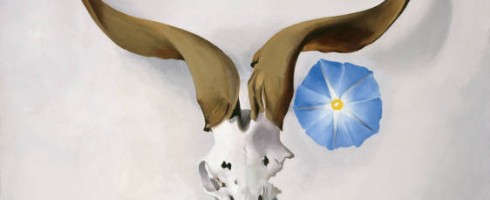
    OK, I know it’s something of a cliche to be a woman who loves the work of Georgia O’Keeffe.   But I don’t care.  I have unabashedly loved her work for what seems like forever.  And I’m proud to say that my ten year-old niece, Samantha is a fan, as well and with no initial prodding from her aunt. ( Though I do admit to unabashedly encouraging her whenever I can! )

    I was drawn to her work on first sight, but it wasn’t until I began taking studio courses in drawing and painting that my love truly blossomed.  Maybe it was that her palette seemed to be similar to the colors I was repeating in my own work.

    Or maybe it was how shocking some of her abstract work, thought to recall certain parts of a woman’s body, were in her day.  Perhaps that sense of rebellion against the “boys club” appealed to the feminist in me.

    It could have been how she was celebrating quiet and peace of the natural world, while technology was being ushered in at a rapid pace.

    Maybe it is the softness of her brushwork– seriously, can you even see any brushstrokes?   Or how delicate her lines were drawn.

    Perhaps it is a combination of all these things.  Whatever it is, I find her work magical.

    All images via the Georgia O’Keeffe Museum online.

  • Behind the Museum Walls: Thoughts From a Curator

    Good morning, all!

    Do you ever wonder how pieces are chosen for museum exhibits?  Why one work makes the cut but another doesn’t?  I just read this interesting little article written by Katharine Stout, curator of the new exhibit, “Watercolour” at the Tate in London.  A fascinating look behind the choices of work and use of watercolors today.   Although traditional watercolor landscapes have a long history in Britain, Stout chose to focus on contemporary work, making the exhibit more relevant for today.

    Hope you enjoy this little peek behind the museum walls!

    Tate curator Katharine Stout on the contemporary works in ‘Watercolour’ | Tate Blog.

  • Loss of a Legend: Hamish MacEwan

    Loss of a Legend: Hamish MacEwan

    Yesterday I learned of the passing of one of the great leaders of the art community in Jacksonville, Hamish MacEwan.  Hamish was born in Scotland, eventually coming to the US and earning a Masters of Art degree from Harvard University.  His career brought him to Jacksonville and though he gained notoriety as the head of the arts department at Episcopal High School in Jacksonville and producer of cultural programs for Jacksonville’s local PBS Station.  It is in his paintings and personal relationships that Hamish’s real legacy is found.
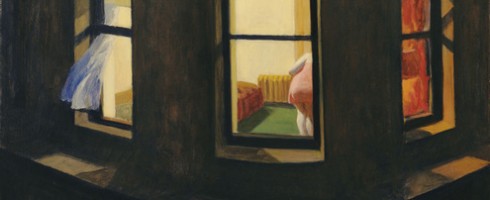
    Vertical Interior Exterior I by Hamish MacEwan

     I can still vividly remember my first encounter with Hamish.  I had only been working at Fogle Fine Art for a short time, when Hamish came into the gallery on Beach Boulevard in Jacksonville.  I had, of course, already been familiar with his work from living in Jacksonville and working for SuperStock, who handled the licensing of much of his artwork.

    Vertical Horizontal Break I by Hamish MacEwan

    He came into the gallery looking like a character from a Rosamunde Pilcher novel, dressed in cordoruoys, tweed jacket ( complete with elbow patches! ) and hat.   His voice had that beautiful Scottish lilt and he was the epitome of a Scottish gentleman.  I always remember his hankerchiefs, because they reminded me of my own grandfather, also an old-school hankerchief user.

    Vertical Interior I by Hamish MacEwan

    Hamish was a prolific artist, painting every day even into his 90’s.  In 2009, Fogle joined forces with MOCA Jax to do a retrospective of his work the year Hamish turned 90 years old, “90 in “09” showcased the artistic journey of this remarkable artist.  I was fortunate to give Hamish a ride home after the opening at the gallery.  He was blown away by all the attention and so appreciative and humbled by this celebration of his life of work.

    Vertical Interior II by Hamish MacEwan

    After I dropped Hamish off that night, I watched him amble along the sidewalk to his apartment, leaning on his cane.  I pictured him the next day, same as always, painting in his studio.  I like to think that he is still painting.

    Goodbye, Hamish.  Thank you for the creative legacy you have left us all.

    All images via Fogle Fine Art.

  • Masterworks Monday: The Cubists

    Sorry for the late post today– we’ve had some big things happening, so I’ve been a bit preoccupied.  More on that later!  For this week’s Masters Monday, we’re going a little more modern– enter Pablo Picasso and cubism.  Cubism is an early 20th century art movement that was begun by Picasso and Georges Braques in which objects were depicted from a multitude of viewpoints in a seemingly random fashion.

    Juan Gris. Breakfast. (1914)

    Breakfast by Juan Gris

    For me, cubism was a quite a breakthrough while taking figure drawing classes in college.  Once figure drawing started clicking for me, ( it was horribly frustrating at first, but my professor at UNF, Paul Ladnier, told me that one day it would just “click” and it would be smooth sailing– I didn’t believe him until it actually happened that way! ) it was then that Paul suggested I try a little cubism.  That’s when things REALLY started to get more fun and interesting!  I loved exaggerating the planes and forms.

    Pablo Picasso. Girl with a Mandolin (Fanny Tellier). Paris, late spring 1910

    Girl With a Mandolin ( Fanny Tellier ) by Pablo Picasso

    I realize Cubism isn’t everyone’s cup of tea, but for me, it was the introduction into a different way of seeing, a new perspective on how we look at the things we see.

    Images via http://www.moma.org

    Read more about Cubism on MOMA’s website!