Are you missing flowers yet? I absolutely LOVE winter, but we’ve gone a few weeks now without any snow and the brown grass is making me uncharacteristically antsy for spring. I imagine many of you are longing for the brightness of a blooming earth, too, yes? These magical floating floral worlds of Swiss artist Thierry Feuz are sure to warm your spirit.
Flowers and organisms float freely through the atmosphere, squiggling and jiggling their way through, destination unawares. Feuz’s work brings to the forefront of our minds just how very magical the natural world is– how haphazard it can sometimes seem but how cleverly and intricately it is designed and connected. And how very fragile each species is, tethered to life by the most delicate of strings.
I’m a Southern girl. You may not know that about me, since we’ve been all over the Northwest during most of Artsy Forager’s existence. OK some may not include Florida as the Deep South, but North Florida is pretty dang close to South Georgia, which is pretty dang Southern. Mr. F is a Southern boy and while we definitely feel more at home in the Northwest, there are things about the South that are so incredibly identifiable and iconic, that only Southerners, whether by birth or transplant, truly understand. Artist Jon Davenport came to the US South by way of the UK where he grew up well versed in Southern iconography, but it wasn’t until he was fully immersed in its culture that he began his artistic exploration of distinctly Southern tastes.
Jon, who shares a similar style to his wife, this month’s Featured ArtistChristy Kinard, creates heavily textured, layered work filled with vintage advertising imagery much of which built up our ideas about life in the South, for better or for worse. Some of these icons can still be seen as faded paintings on the sides of buildings, especially in small Southern towns. In many ways, there is a fierce desire to hold onto the past in the South, where Sunday dinners at grandma’s and yes ma’am and no ma’am are still the norm.
Yet behind the fun and frivolity and charm, there was a darkness that would best be forgotten and which many Southern cities are still fighting to overcome. Many strive to overcome lingering stereotypes and “Ol’ Boys Networks”, while seeking to maintain the best of what it means to be a part of what has been a troubled region. Davenport’s work with its bright but slightly faded palette and layered drips and splotches of paint remind us that time marches on, ideals fade, but hopefully what is left is our favorite, most positive parts of ourselves.
To see more of Jon Davenport‘s work, please visit his website. His work can be seen in his solo show at Matre Gallery in Atlanta through February 8th. Stay tuned over the next few days for interviews with Jon & Christy in a special “He Said, She Said” feature on what it’s like to be half of a creative couple!
Our modern society has such a fascination with speed and we are constantly feeding our need for it with faster internet, cars, food, you name it. But once upon a time, most cultures valued things done with meticulousness and care. Florida based Japanese artist Hiromi Moneyhun hand constructs elaborate and delicate paper cuts using a methodical and time consuming process, hearkening back to the careful artistry and precision long cherished in the Japanese culture.
Drawing upon characters synonymous in traditional Japanese culture for their artful deftness such as the geisha and oiran, Moneyhun carefully drafts these complex paper-cuts first as line drawings. It is only after the initial drawing is complete that she begins the slow, methodical process of cutting around the lines to create sculptural drawings that delicately float, an interesting juxtaposition to their bold lines and composition.
In one way or another, we all buy into the idea of “the American Dream“, we strive for success and prosperity. And if we haven’t achieved it, we’ll fake it ’till we make it. Or we’ll just fake it. In his mixed media work, Brooklyn artist Matthew Conradt looks at the contradictions we’ve built in our pursuit of the prosperous dream.
We buy McMansions with more space than we’ll ever need, filling them huge flat screens and designer knock-offs. We stand in line to upgrade to the latest phone, we trade in perfectly running cars for new. We’ll present ourselves as successful and prosperous, even if we are drowning in debt in our pursuit of a facade.
Conradt’s work begins with the collection of found imagery symbolic of American Life. The images are then reconstructed and transferred onto mylar in large scale form, reinforcing the “bigness” of American culture. The resulting images focus on the contradictions we find in our culture and how they creep into our subconscious.
Mr. Forager and I are without a home. We have a roof over our heads always, but as we move from furnished rental to furnished rental, none of them are actually home. A place that is ours, filled with our own tastes and personalities. In a way, it is incredibly freeing– if we had a home to decorate, believe me, I would spend waaay too much time doing so! This idea of creating a beautiful, comfortable home has been around for centuries and continues to be perpetuated and heightened today by magazines, blogs, and social media. The burden of home-making, often self-inflicted, usually falls to women. In her Anonymous Women: Draped series, photographer Patty Carroll explores the idea that we become so obsessed with creating a perfect space that we lose ourselves in the process.
From the artist’s website, “I am addressing the double edge of domesticity; the home as a place of comfort, or conversely, a place where decoration camouflages one’s individuality to the point of claustrophobia“. Or to the point of invisibility. If, like me, you’re a reader of interior design blogs, think about the homes you see– don’t they all kind of look a bit alike? We follow trends and take hold of popular styles, never really considering whether or not it truly reflects who we are. I look back on some of my own choices and wonder, who was I? The answer– I had no clue who I was, so my choices reflected that lost sense of self.
And its not only in decorating our homes that we lose ourselves, but in fashion, work, tradition, emotion, even as members of larger groups, we immerse ourselves, taking on characteristics that may not otherwise have been a part of who we are. Then, its only when we separate ourselves that we realize that the entire time we felt that sense of belonging, we, as individuals, were actually lost.
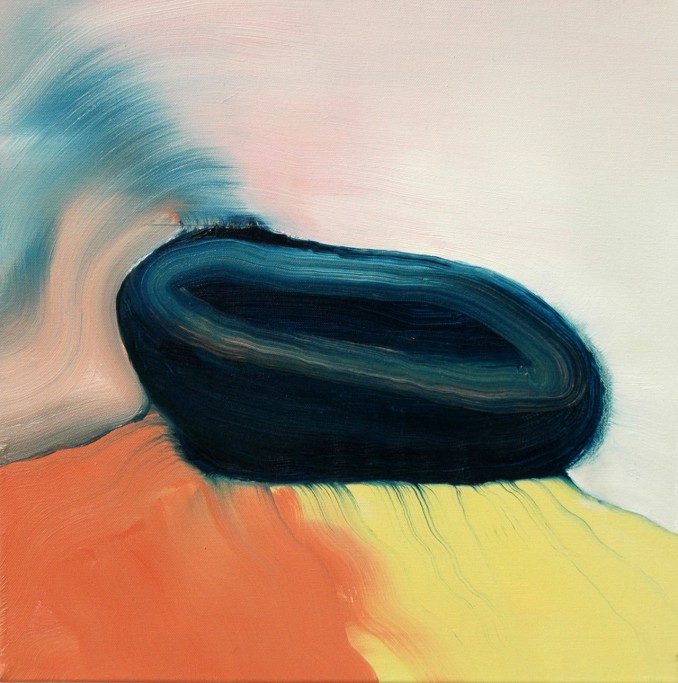
Artists, let me ask you a question. When you paint, do you find yourself mesmerized by the way the paint is moving across the canvas? Not in an I’m a painting genius kind of way, but in an omigod paint is the most beautiful, wonderful thing ever, way? Just me, then? Ooookay. Seriously, it is the gorgeous movement and blending of paint that draws me to the work of artist Francesc Ruiz Abad.
You can see the gentle stroke of the brush, imagine it filled with paint, the colors mixing on the palette first and then the canvas. Light, luscious, cotton candy like movement through the surface of the paint. Colors bleed beautifully into each other, creating a sense of light and softness.
Paintings like these make me want to paint! And run my fingers over each canvas.
Thumbing through an old photo album. Spending an afternoon sifting through the contents of a cedar chest. These are things I took for granted before we started traveling. I’m even a bit envious of friends posting childhood photos of themselves all over Instagram for “throwback Thursdays”. All of my nostalgic ephemera is tucked away in a storage unit in Seattle. So I couldn’t help gushing over the work of Berkley artist Jane Hambleton whose mixed media pieces layer together glimpses of time into collected memories.
Beautifully textured, these created fragments seem torn from life’s scrapbook. Sweet, momentary glimpses into a day, a summer, a moment that may have long been forgotten. Each piece is lovely on its own, but when put together into installations, as the artist intends for each series, we see not only black and white memories, but blank canvases of color. Perhaps these are the times that aren’t specifically remembered, yet in our minds they are still colored with feeling.
The We Are the Contributors mini project got me thinking recently about the various roles we play. Yet we aren’t just taking on different tasks, we’re often putting on an almost completely different persona according to where we are and with whom we’re interacting. These sculptures by German artist Reinhard Voss, with their Cubist-like style seem to give us a physical manifestation of the various faces we put on.
Voss’s sculptures are created by piecing together strips of wood, leaving our eyes to see the varying grains and planes making up each face. The effect is eerie at times, resulting in a face contorted or seeming to have been erased.
The different “faces” we put on can be so similar, can’t they? We might lose our mouth ( i.e. hold our tongue ) in certain situations or be blinded in others. How often do we are we truly showing who we are? In what company do we feel we can show the most honest face?
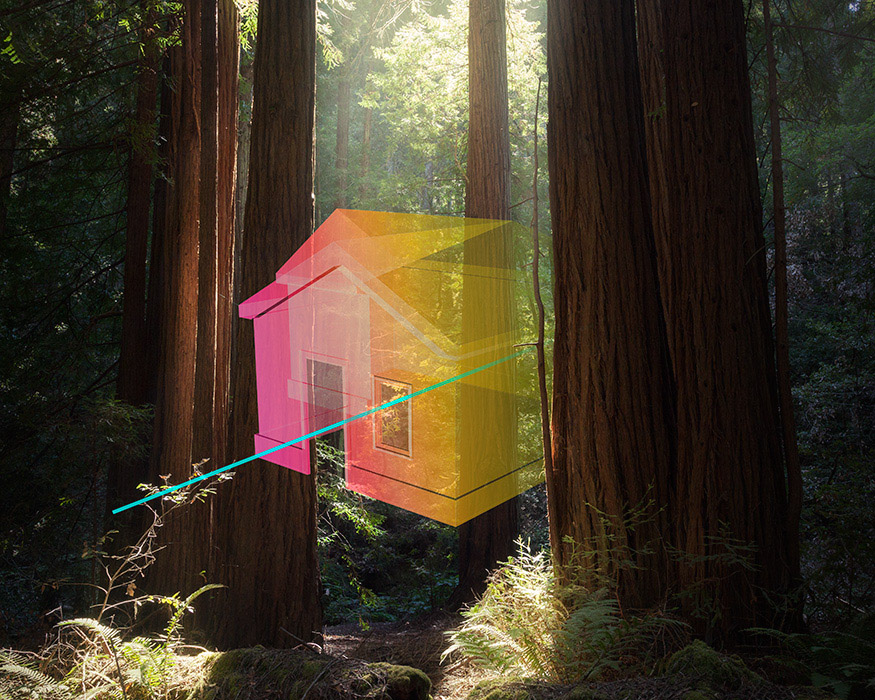
One of our favorite things about taking time out for hiking and camping is getting unplugged. No laptops, no iPad, no phone. Only a camera. I believe these excursions truly help Mr. Forager and I in our ability to willingly step away from the devices that seem to be ever present. In his photo series //_PATH, photographer Mark Dorf examines our dependency on technology and the impact that attachment is making on society.
The photographer imposes 3D renderings and collage into photographs of lush forests, deserted beaches and snow capped mountains. This technology we welcome so readily into our lives is encroaching ever so rapidly upon everything we touch, everything we see and do. How long until our phones work in the now unreachable depths of the woods? How long until we are no longer able to switch off?
To see more of Mark Dorf’s work, please visit his website. Was unplugging more one of your resolutions for 2014? How are you doing so far?
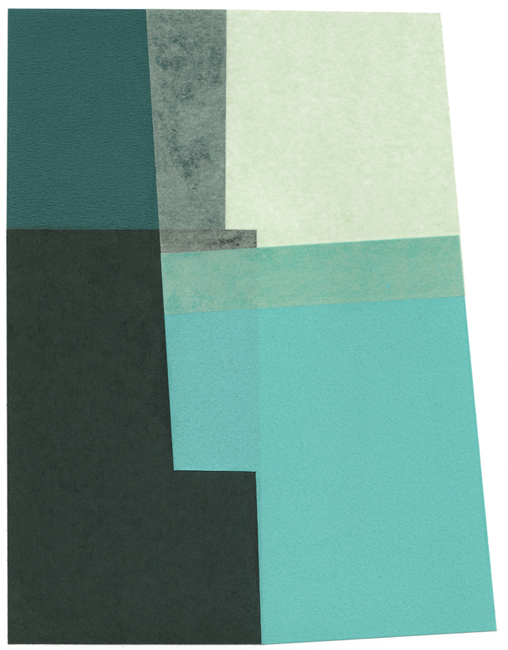
There is a school of thought that in order for something to be good, it has to be complicated. A special meal must mean slaving for hours in the kitchen, the latest tech gadget must be filled with buttons and apps of every variety. But there is also beauty and tranquility to be found in the paring down. Portland artist Courtney Price distills her paper collages into the most elementary of forms, yet the results are filled with dimension and sophistication.
Overlapping paper shapes one on top of the other just so, Price is mixing color with light and shadow, creating varying shades just as she might with paint. The forms advance and recede according to their hues and how our eyes perceive their shapes. And oh, those palettes! Each piece seems to be a study in color relations.


 Flowers and organisms float freely through the atmosphere, squiggling and jiggling their way through, destination unawares. Feuz’s work brings to the forefront of our minds just how very magical the natural world is– how haphazard it can sometimes seem but how cleverly and intricately it is designed and connected. And how very fragile each species is, tethered to life by the most delicate of strings.