Last week, as I was finishing up a painting a little gift for my niece, I got to thinking about what we tend to listen to while creating. For me, my studio soundtrack depends on what I’m working on– for instance, when I work on one of my Feminine Wiles pieces, I tend to prefer classic female voices like Billie Holiday or Edith Piaf. But if I want to just let loose and experiment, I like to listen to maybe something a little energetic and soulful like Florence + The Machine or Motown.
So tell me, Artsies– what’s your studio soundtrack?
pump up the jams | Are you a high energy creator? Maybe you like to blast the beats or turn it up to 11? Rockin’ it old school with some classic rock, 80’s rap or modern girl power totally gets my energy pumping!
slow ride, take it easy | Maybe you like a more peaceful soundtrack for your studio? I know I’ve occasionally asked Mr. F to change the tunes when they’re just a bit too raucous for the mood of what I’m painting. Classical, slow blues, maybe even just something soft and acoustic help keep the mellow flowing.
voices carry | So maybe music isn’t your thing. Some artists fancy a spoken word soundtrack like audio books or talk radio. If I choose to nix the music, This American Life or artist interviews on YouTube inspire and keep my interest without being too distracting.
sounds of silence | Some artists prefer a more quiet creative space, preferring to work with no sound at all. Especially if you’re working on something highly intensive, sound can be a little distracting. So maybe your soundtrack is simple silence.
Which type of studio soundtrack do you prefer? Any specific musical artists, types of music or non-music you always have on your studio playlist? Let’s all share in the comments!
Thanks to Jessica Brilli for providing the beautiful artwork for this post! My first radio may or may not have been similar to one of these.. See more of Jessica’s work on her website!
Last weekend, Mr. F and I took a little backpacking trip up into the Trinity Alps, a mountain range about two hours east of Eureka. As we were hiking, I got to thinking about the parallels between the creative process and adventuring. The act of being creative, whether as an artist, writer, musician or however you stretch those muscles, is a daring endeavor– you can plan and prepare, but the real joy is in the unknown path ahead.
Want to know how to be a creative adventurer? Here are a few simple steps to venture into the unknown!
1 | set some goals and make a plan. Think about where you’d like to end up and what you think you’ll need to achieve to get there. The trail might be smooth or you may end up doing some bush-whacking to find your way, or you may change course altogether, but setting out with a vision of the finish line will help keep you focused when you feel like giving up.
2 | find yourself a partner. Whether it’s a spouse, friend, or fellow creative, tell someone your plan. It’s never smart to go out into the wild on your own and having some company along the way will help to keep you on the right track and keep your perspective in check.
3 | work your plan, one step at a time. We all want to race to the finish line, to skip the grueling climb and reach the peak. Prepare to feel overwhelmed, discouraged, to want to turn around and head back down the mountain. But keep on keepin’ on and before you know it, you’ve turned the next corner.
4 | know when to veer off the plan and take a risk. Just because you have a plan doesn’t mean you must stick to it if things aren’t working. Maybe the path isn’t what you thought it would be or you just need to liven things up a little. Take a risk and you may find that you end up in a place even better than you imagined.
5 | let yourself take a break. If you’re finding yourself discouraged or disillusioned with where you’re going, give it a rest for a while. Do something else, something fun and completely different, then come back refreshed and rejuvenated.
6 | celebrate your successes! It’s easy to get so caught up into heading for the next goal that we forget to take the time to celebrate our achievements. Take a moment, a day, an evening, and dedicate it to treating yourself and reveling in a mission accomplished!
7 | evaluate & recalibrate Now that you’ve reached the pinnacle, look back at what you’ve done and how you got there. What would you change? How can you be better prepared for next time? Mr. F and I do this after each backpacking trip and we always find things we can improve for next time.. I mean, did we really need all this trail mix?
Once you can see objectively where you’ve been and how you’ve got there, you’ll have a clearer idea of where you’d like to go next. And a sense of assurance that you can do what it takes to get there.
Are you headed out on a creative adventure or find yourself in the midst of a journey? How’s your progress?
When we think of an art collector, our minds may wander to Rockefeller-types plunking down millions for Warhols at Christie’s. We ordinary folk rarely think of ourselves as art collectors. But if you’ve ever purchased even one piece of artwork, even just a print, you dear Artsy, are a collector! Of course, it’s possible to build a collection filled with beautiful and historically significant work, but wouldn’t it be more fun to put together an art collection that is meaningful just to you and your partner? Mr. F and I hope to do just that, so while reminding ourselves of these guidelines, thought I would share some tips with you!
1 | get to know your favorite artists personally Most artists these days interact with fans and collectors on social media. Getting to know the artist whether online or by visiting their studio can often turn work you like into work you love! Knowing more about the artist’s process and inspiration can foster a connection to the work that may not have been present upon first glance. Plus, a positive relationship or connection with the artist will make you more inclined to support their career financially.
Sometimes, we simply like what we like and it doesn’t go deeper than that. But often, we are drawn to a particular piece of work because of the emotions it stirs within us. Maybe it reminds us of a particular moment or memory or transports us to a favorite place. Work that reflects an important time or occasion creates emotional significance that just isn’t there when we buy a painting to match the couch..
3 | make artwork your vacation souvenir Forget all those t-shirts and caps that will be worn a few times and then forgotten. Visit a few galleries or artists’ studios while you’re traveling and buy a small piece of work that will be a lasting reminder of your travels. Most galleries and artists will ship work home for you if you’re concerned about fitting your new art into your suitcase. And every time you see that sculpture or painting, you can visit that place all over again.
4 | proudly display a loved one’s artwork Maybe your mom or grandmother took some painting classes and discovered a love for still lifes? Or kids are the most prolific artists in the world, take advantage of their creativity and display their work with the importance it deserves! Not only will it remind you of them and make you smile, it will show the artist how significant they are to you.
While of course, I’ll always advocate buying art whenever you can, realistically, we don’t always have the budget for the type of work we love. So perhaps while you’re saving up, stretch your own creative muscles a bit by playing artist for yourself! There are any number of DIY art projects all over Pinterest. Who knows, you may discover hidden artistic genius!
So you’ve found an artist whose work you LOVE and you want to commission the artist to create a piece of work especially for you. How exciting!! But you don’t know where to start. If you’ve never done it before, commissioning an original work by an artist can be intimidating ( for you and the artist! ). So here are a few guidelines on how to commission artwork that I hope will help when you’re ready to take the plunge!
1 | know the artist, know yourself
As enticing as it might be to instantly fall in love with an artist’s work and immediately set off on commissioning them, you’ll be better off slowing down a bit. Take some time to really get to know the artist’s work, their palette, style, medium, what you love about it, ask yourself if living with a piece of this artist’s work will make you happy forever and ever.
Once you’ve done that, figure out what you want. If you’re commissioning for a specific location, figure out what size would work best ( often an artist can help guide you if you’re uncertain ). Do you prefer a work on canvas or paper or another substrate? Maybe the artist works in a few different styles like our Featured Artist, Erin McIntosh. If so, determine which style you’d like your commission to follow. And then there’s the most fun decision of all– palette. What colors would you like to see incorporated? Is there a certain palette the artist works within that you love? Collect fabrics, paint samples, photos, anything the artist can use for reference and guidance. Help the artist by creating a vision of what you’re expecting.
2 | communicate what you want
Reach out to the artist first and find out if a| they are accepting commissions, b| what their current lead time might be, and c| the price for a commission in the size you’re desiring. It’s possible that the answer to any of these questions might mean putting off the commission until the artist has time or you have the necessary funds ( though always ask about payment options– many artists will work with a payment plan! ).
Once those basics are agreed upon, chat with the artist via phone or email about your expectations ( email is best, so you both have a record of what was discussed ) . Share all the visual references you can, use as many descriptive phrases as you can– like happy, serene, intense, organic, bright, light, etc. Give the artist your specifics regarding size, substrate and style and be sure to include information like where the piece will hang, who it is for ( if a gift ), if the work will commemorate a special occasion, etc. All these elements will help guide an artist into creating a work of art that fits your vision.
3 | expect a written agreement
Once you and the artist have communicated fully your exact needs and expectations and agreed upon a price and lead time, the artist should provide you with a written statement of what is to be done, including all specifics regarding price, size, substrate, palette, shipping arrangements if not local, deposit and payment arrangements, etc. for your approval and acceptance. This step protects both your interests and the artists, certifying that both parties understand what is expected of each other.
4 | don’t mistake an artist for a machine
Let’s say you’ve commissioned an original based on another existing but unavailable work by the same artist. Same style, same substrate, same palette, same everything. But don’t expect an exact replica of that piece you loved. An original piece of artwork is a completely unique undertaking, each piece will have its own personality. Just like a snowflake, no two are exactly alike. On the other hand, if you receive progress photos from the artist and things don’t seem to be going in the direction you’d specified either stylistically or palette-wise, don’t be afraid to communicate your concern to the artist. They want you to be happy with your finished piece, so your feedback will be necessary and appreciated.
5 | be patient, be available
You’ve paid your deposit and the artist has given you a lead time. Now just sit back and wait. I know it’s hard!! We live in such an instant gratification society, we want what we want and we want it NOW. But creating an original work of art takes time and the artist may have other projects due to be completed before yours. It will be done, just be patient. And be available if the artist has questions, wants your input or needs your opinion. ( see #4 ).
6 | accept your finished piece with grace and thanks
Wham, bam, thank you ma’am is no way to finish off commissioning a piece of artwork. Yes, you’ve paid the artist, but said artist has put a tremendous amount of time, creative energy and spirit into your creation. A heartfelt, gracious thank you goes a long way! And helping spread the word about your beautiful new work of art and lovely commissioning experience will support and encourage the artist’s career and soul.
Now all that’s left to do is to live with and love your work of art for always!
You know, there’s more than one way to skin a ca— I mean, hang artwork. I hope I proved that in our last foray into Artsy Dwelling! Be a rebel. Don’t hang that art at all! Go all crazy and casz.. just let it lean.
Leaning = layering. If you keep your artwork relegated to the walls, you’re holding it at a distance. You know, like that moldy fruit you found in the refrigerator. But living with art should be about living with it, having it truly be a part of the way we interact in our personal space. Leaning brings it in close. We can study it, pick it up and touch it, live with it in ways we can’t do when it’s nailed to a wall.
Check out some of my favorite ways to style leaning artwork–
Take advantage of those architectural details as a natural resting spot for artwork. It’s kind of Decorating 101 to put artwork above a fireplace, but leaning it on the mantle, especially when layered with other pieces creates a visually rich display that’s easy to change up with the seasons or just on a whim!
Same rules apply for furniture. Wait, forget that. There are no rules! Big art, small art, doesn’t matter, as long as it makes an interesting impact and puts a smile on your face. It all goes back to that layering thing. Leaning artwork connects itself better to the other objects in your vignette when it is sitting on the same surface. It’s like bringing your artwork into the half-time huddle. Now he feels included!
PS– If you’re gonna lean artwork on your headboard, might be a good idea to secure the back with a little 3M velcro, you know just in case things get a little, shall we say frisky? Oh come on, you know you were thinking it!
My favorite rule to break. Used to be, no art lover would dream of putting artwork, which let’s face it, we probably paid a lot of money for, even partly hidden behind a piece of furniture. But that little artsy game of peek-a-boo leaves me wanting more!
Maybe you have the perfect spot for a piece of artwork, but hanging just isn’t practical. Just lean that baby on the floor. The perfect solution especially for super oversized pieces of work that it would take an army to hang! Or for when we want a splash of color but don’t want to commit to holes in the wall.
Of course, it should be noted that leaning artwork, especially on the floor and behind furniture isn’t the idea solution if you have small children, rowdy teenagers ( ok, really any kids at all ) or clumsy husbands. 😉 Do you have any artwork leaning around your house? Share a photo over on the Artsy Forager Facebook page, I’d love to see!
Hiya Artsies! Oh boy, so many exciting things happening ’round these parts! Feel like I’m all over the place in the best sort of way. This week, I have a guest post up over on the Image South blog. If you’re not familiar with Image South, they are a publisher of fine art prints offering beautiful work at affordable prices. For my guest post, I took one IS print, Essential Line #4 by Mitra Ghaffari, carefully chose versatile Larson Juhl framing and then showcased it in three very different spaces. Head over to the Image South blog to check it out!
Hi Artsies! I’m taking a tiny break for a few days, while we visit with some dear friends from Florida. Please welcome fellow art lover and blogger, Kaitlyn Patience, who blogs and creates gorgeous stationery over at isavirtue!
Hello, my name is Kaitlyn! I am the author of art and snail mail blog “isavirtue.” I will be guest posting today on Artsy Forager.Last summer, Lesley wrote an excellent two-part blog post entitled “Yes, Virginia, You CAN Afford To Buy Artwork!” Aside from being the best title in the history of all blog posts, these two guides are an excellent resource to both online and offline art purchases. If you are looking for even more resources, I provide a similar post on my blog, listing a variety of art sale websites. Lesley’s belief that art collecting is not just for the wealthy and the learned connoisseurs is one that we both share. I believe art is, and should be, available to everyone.That being said, there is certainly an intimidation factor involved. This fear of art may stem from its perceived value, or a lack of knowledge. The first concern is an easy one to strike down. Art is affordable. You can take my word for it, or you can peruse the aforementioned guides. No matter what your budget is, you will be able to find art that you love.The second issue, a lack of knowledge about art is one shared by many. To be honest, I don’t believe you have to have any knowledge at all. If you like it, and can afford it, then buy it! That being said, if you want to know more, I’m happy to share with you a mini tutorial on the types of art available for home décor (Sorry, you generally can’t buy installation art, performance art or public art!).The following information is a simplified version of what is offered in my online e-course, “make art a part (of your life).” I encourage you to read more about the course here (LINK: http://blog.isavirtue.net/p/e-course-registration.html) – it’s great fun and you can enjoy it at your own pace!
“There’s a ninety-nine percent chance you already have some version of art in your home, whether it be a cool print you found, a little DIY, your children’s artwork, or one of those hip new canvas transfers. I’m hoping you feel so inspired by reading this that you are anxious to rush out get some more art to decorate your home! But what type of art will you buy? Is it important to you that it be “original”? What’s the cheapest way to go about this? What is the difference between a regular print and a limited edition? How do you know you aren’t over-paying?”
Goodness me, you have so many questions! First, let’s look at the different types of art available.
Original, Jessica Bell ( via Buy Some Damn Art )
Limited Editions | A limited edition work of art is the next notch down on the value scale. This is because while there are multiples of the art, the number is restricted. A limited run of art prints for example, may include anywhere from two hundred to one thousand pieces. However, any more than two hundred and the term “limited edition” is being stretched.
Limited Edition print, Jennifer Sanchez ( via 20×200 )
Canvas Transfers | A photograph, poster or print that is taken and laid on canvas through chemical or heat transfer. The canvas is then tightly wrapped around a wooden frame to look like a gallery style painting. It’s brilliant because it lets people purchase art for their home at really reasonable prices.
Canvas Transfer, Flapper Doodle ( via Society 6 )
Regular Prints | Any paper print made from a drawing, original painting, photograph etc. There is no inherent value, except to you because you love it!
Regular print, Emma Leonard ( via Etsy )
Posters | Printed on papers of varying thickness, posters can be memorabilia, advertisements or simple decorative images. People love to collect posters because they are the least expensive form of art and can be hung framed or unframed.
Poster, Stephane de Bourgies ( via AllPosters.com )
Import | While not always imported, the term is used to reference three dimensional art which includes foreign objects, replicas or mass produced goods. They often include wall art and freestanding sculptures.
Import, Stag Head ( via Indaba )
I hope you have enjoyed this little lesson and that it will help you in your search for beautiful art!
I am a firm believer in buying art at whatever level you can afford and I’m not talking about the framed art aisle at Target. While there are certain levels of art collecting which some of us may never reach ( I’ve reconciled myself to the fact that I’ll never own an original Georgia O’Keeffe, just keepin’ it real ), there is fabulous art available for every budget! Just because your budget is limited, that’s no excuse for blank walls! For this installment of [ Insert Art Here ], we’ll take a look at 3 art options for the same space– all fab, each fitting a particular budget level. Here we go!
Let’s begin with our blank( ish ) canvas–
From www.nestdallasdesign.com, home of Bradley Agather, designed by Beth Dotolo, photo by Kevin Dotolo ( artwork removed, to see the original design, click on this photo )
For the Beginning Collector:
Artwork by Ann Tarantino via 20×200
Prints are the easiest and most budget friendly way to begin an art collection and these days there is no shortage of sources for quality limited editions. These Ann Tarantino prints ( Far and Wide [ left ] and Flying Colors [ right ] ) are archival pigment prints, $200 each ( not including framing ) and are available through 20×200. Pretty sweet, right?
For the Mid-Range Artsy:
Artwork by Michelle Armas
So you’re ready to put your money where your mouth is and begin a serious art collection? Original work by emerging artists is a great place to start. Atlanta artist Michelle Armas has become something of an art & design blog darling and with that comes a certain ( well deserved! ) notoriety which makes her work highly collectible. Her abstract paintings are riotous and painterly, filled with joyous color. The piece above,Eggplantis an acrylic work on canvas, 30×40 inches. It is available through Gregg Irby Fine Art at $1000. An awesome price for a piece of that size and quality! Forego your daily $4 chai-mocha-frappawhatever from Starbucks and you will be able to purchase a piece like this, too. It’s all about priorities, ya’ll. 🙂
For the Serious Artophile:
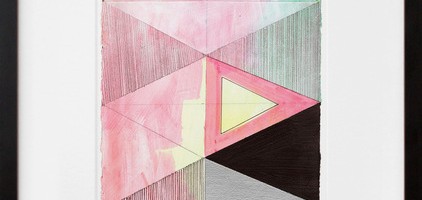
Artwork by Christina Foard
Christina Foard is a painter’s painter. She paints intuitively and revels in the materials, not afraid to get her hands dirty. There is an emotionality to her work that, along with its glorious physical texture, provides a depth that you don’t always find in abstract compositions. The piece above, Floating Invasion( acrylic on canvas, 40×30 ) provides this space with a certain amount of gravitas, while still giving just the right amount of color and movement. But Foard’s works are pieces you buy because you can’t stop thinking about them.. you have to have them.. If they happen to match your throw pillows, well, that’s just a bonus. ( FYI– Floating Invasion is no longer available, but Foard pieces in a similar size are usually in the $3000 range )
My final word.. as Dan Fear said “Buy art because you like it and because it moves you, and because it enhances your life.” This has been a little exercise that I hope will inspire you to purchase a piece of art that you love this year. Now that’s a new years’ resolution I can get behind!
Please enjoy this oldie by goodie while I spend the next two weeks camping, packing, visiting with the mom-in-law and moving from WA to OR. See you in September!
The affordable artfest continues today! In case you missed it, you can catch Part 1 here. Here are a few more suggestions for purchasing affordable artwork:
Art festivals– Just about every community at one point of another puts on some kind of arts festival or at the very least, there are a few within easy driving distance of where you live. Festivals are a great place to check out ( usually ) a wide variety of artwork. And with individual artists manning their own booths, it’s also a great opportunity to chat with them about their work. Plus, you can usually score some funnel cake. Win-win!!
ArtWalks— Many communities are also getting on the ArtWalk bandwagon, which I am all for! ArtWalks customarily take place once a month, usually the same evening every month such as the First Friday or Second Saturday. While the ArtWalks usually involve visiting local galleries, which we’ll touch base on below, many of them set up tents in a local park or closed-off street where local artists can display their wares.
Arts Markets– A growing trend is a local “arts market”, which is a weekly market, combination farmer’s market, street fair and arts market. A wonderful way to spend a Saturday morning, grab some fresh ingredients for dinner, listen to local music and discover new artists.
Local Galleries– You may think this one is obvious, but in many communities, brick & mortar art galleries are rapidly disappearing, thanks in no small part to the recession. If you are lucky enough to have some local galleries in your area, do what you can to support them. Don’t just go to the free events– actually buy something, even if it small. Many galleries today offer payment plans for larger purchases, don’t be afraid to ask. Galleries are in the business of supporting artists and selling their work. While it’s nice to browse, browsers don’t pay the rent. Most art galleries are run by average folks who love art or are artists themselves and are an important feature of any thriving community. Please patronize local galleries– your community will thank you.
Art by Students– Chances are, you have a community college or university of some kind in or near where you live. These institutions are often filled with budding artists. Check the colleges’ websites to find out more about their art programs, exhibitions, etc. Purchasing student work is a wonderful, economical way to start a collection AND help give emerging young artists a boost of confidence. Even if they don’t make a career out of being an artist, that student will always know someone loved their work enough to buy it and they will cherish that knowledge. ( I speak from personal experience! )
Artists Themselves– OK, so this suggestion may call for a huge, UMM..DUH, LESLEY!!, but it’s definitely an option, especially today when many artists are foregoing traditional gallery representation, choosing instead to market their work on their own. There are certain advantages to dealing directly with an artist, such as they may have more room to negotiate on price or payment terms without a middle man, as a direct “patron”, the artist may notify you first of new works you may be interested in and best of all, you can get to know the artist personally, which often makes the work you love that much more significant. In addition, many artists are now offering “budget” limited editions of their work, which make it all the more affordable. ( Check out Town Editions, a limited edition collection offered by Pick of the Crop artist, Thomas Hager ). A word of caution though, on a somewhat touchy aspect of buying directly from artists which goes back to my point of supporting local galleries– if you see a piece in a gallery that you love PLEASE do not try to circumvent the gallery and purchase from the artist directly. It’s dishonest and well, just a crappy thing to do. Most artists value their relationships with galleries or have a contract with the gallery and would not sell such a work to you in any case, but I’ve seen it happen.
I hope you find these suggestions helpful. It can be intimidating to buy artwork, but buy what you love and you’ll never be sorry.
Please enjoy this oldie by goodie while I spend the next two weeks camping, packing, visiting with the mom-in-law and moving from WA to OR. See you in September!
It is a huge misnomer that only the rich can afford to be art collectors or even to purchase original work. When most of us think of an “art collector”, we tend to think of the stereotype of the wealthy patron, attending auctions at Christie’s, buying artwork for more than many of us make in a year, heck, in a lifetime. Or maybe you’ve gone into a higher end gallery and seen a price and thought to yourself, “Self, no way you’ll ever be able to afford that.”
Well, I’m here to tell you, the times they are a changin’. It has never been easier or more affordable to purchase original artwork and/or high quality limited editions. No, I’m not talking about the kind of “original art” you buy at the fleamarket or from a sale in a hotel ballroom. I’m referring to original, gallery worthy fine art. The kind you can be proud to hang on your wall.
Here are some suggestions for finding the artwork of your dreams and getting your collection started:
Online galleries/exhibition websites– These are popping up all over the place and many of them represent some very talented artists and you can usually find wonderful work in every price point.
Etsy— Possibly the largest online art & handmade marketplace, complete with a powerful search engine, you’ll find a wide range of artwork available. Many artists are using Etsy to reach a wider audience and as a way to sell their work independantly. ( Note that many of the artists with shops on the “exhibition sites” will have their links on those sites connecting back to their Etsy shops. )
Into the Mystic, photgraphic print, 8″x8″ $30
20×200— this New York City based website works with artists to offer limited editions of original work. Starting at just $20 for the smallest size, 20×200 offers affordable, quality work for newbie collectors.
Well-Being I, limited edition on archival paper, 8″x10″, edition of $200, $20
Papernstitch— I must admit, I’m a little biased toward this one, as it is run by my friend ( and fabulous artist in her own right ), Brittni Wood. Started as a blog, Papernstitch is a growing online exhibition site, curated monthly by Brittni and features handpicked, talented artists, designers and craftspeople. The Papernstitch blog is still going full force and features daily posts from Brittni and a handful of other talented contributors. Papernstitch is definitely worth a look when you are searching for something special.
Open Space by Rachel Austin, original mixed media on canvas, 8″ x 8″, $85
Artwelove— Founded in 2008, ArtWeLove “offers exclusive, museum-quality art editions by today’s inspiring artists”. A big difference with this site is it focuses on offerings from artists whose work is found in top galleries, museums and exhibitions throughout the world. The work is curated and commissioned directly from the artist to ArtWeLove exclusively– you won’t see these prints anywhere else. The site has a “learning engine” similar to Amazon.com, which tracks your artwork preferences over time and makes recommendations for you.
Petal, Pixel and Stain by Nina Tichava, limited edition on archival paper, starting at $50
PoppyTalk Handmade–Founded in 2008 by a Canadian husband and wife team, PoppyTalk Handmade is a monthly curated and “themed” marketplace showcasing artwork, handmade and vintage goods from around the world. Sort of an online street fair/festival, PoppyTalk provides an online marketplace to emerging and indie artists and craftspeople.
Pillow Land, sewn print by Clare Elsaesser of Tastes Orangey, 4.75″ x 4.75″, $20
Stay tuned over the next few days for more suggestions on ways to buy original art on any budget!








![Insert [ the Artsy ]: Art For Every Pocketbook](https://artsyforager.com/wp-content/uploads/2012/01/foard-490x200.jpg)


