One of the things that continues to draw Mr. F and I to the Northwest is the bigness of this world. Everything just seems to exist on a grand scale here– trees tower, mountains loom, rivers stretch far and wide. In his sculptural work, artist Matt Wedel creates fantastical oversized forms and flowers, leaving no doubt that sometimes bigger is indeed better.
Wedel’s larger than life flowers and plant forms spring forth from craggy rock-like shapes, fairly bursting forth as if they simply cannot be contained. Color spills down from their petals, as if the life held therein is overflowing onto the rock below. Exaggerated faces and fantastical forms create a wonderland where we might come to recognize that humans really are so very small.
We’re so casual these days. Heck, all my high heels are in storage, I probably won’t see them again until around 2018! But there are days when I miss getting dressed up. Remember that careful giving I was going on about yesterday? These sculptural floral arrangements by Takaya Hanayushi remind me of our need to present ourselves artfully.
The idea of adorning oneself in a certain way, whether to mark one’s place in society or simply as personal expression is a human trait that seems to have been with us a long time. And although in our dressed down society, such lavish adornments as were once practiced are rare, we still find ways to incorporate these rituals. We pierce and tattoo, we find just the right pair of shoes, we refuse to wear animal fur or skins. Though it may be in more subtle, 21st century ways, we are still each day painting our own portrait of who we are and presenting it to the world.
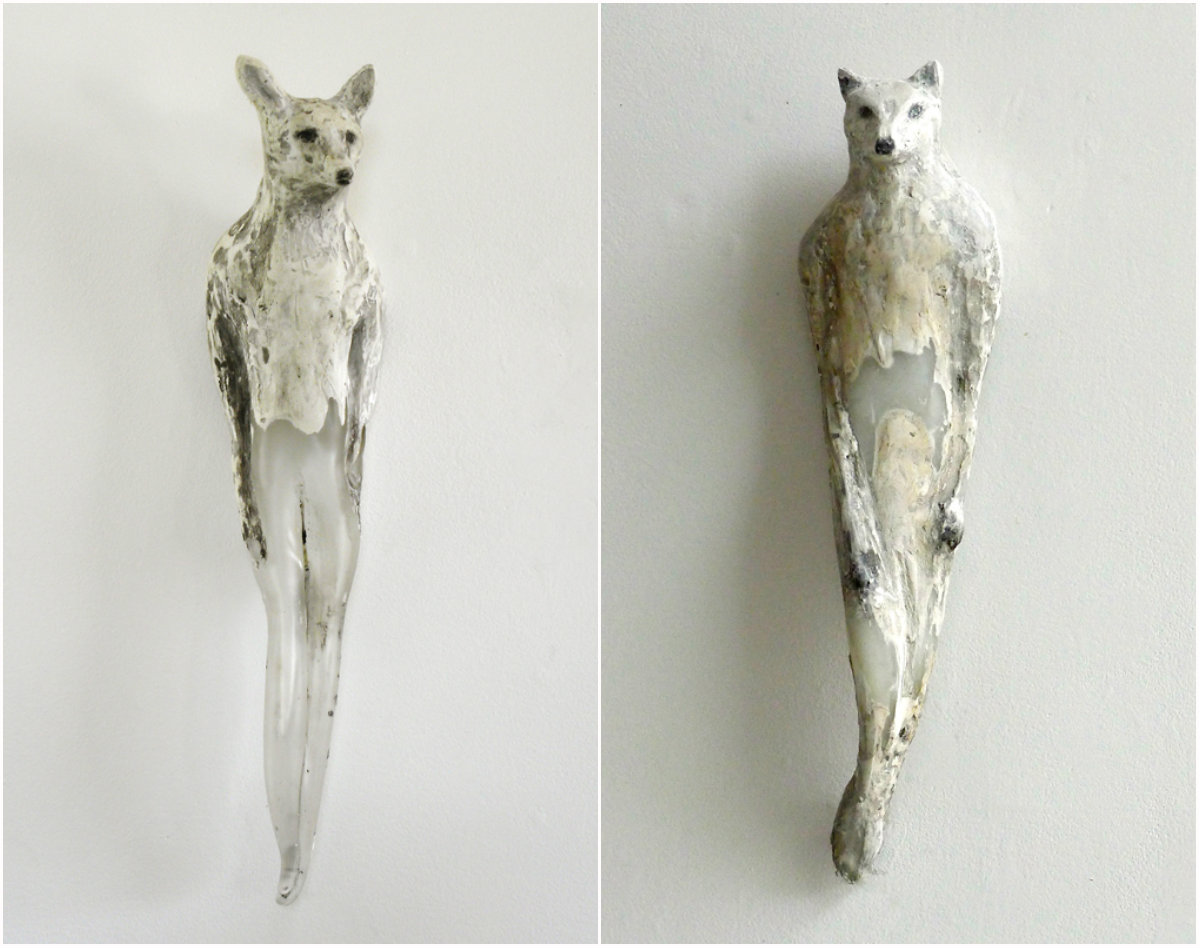
There is nothing quite like a quiet day surrounded by wilderness to get us in touch with the wildness inside. Even more thrilling is to spot an elusive animal on its own turf. California artist Jane Rosen sculpts wild creatures in all their quiet, untamed beauty.
Rosen’s sculptures have a caged serenity about them, as if reigning in their innate wildness for the spectator. I bet they come to life the minute your back is turned! The artist’s choice of materials bring a purity and etherealness to each piece. They almost seem to be representations not of the animal itself, but of its spirit.
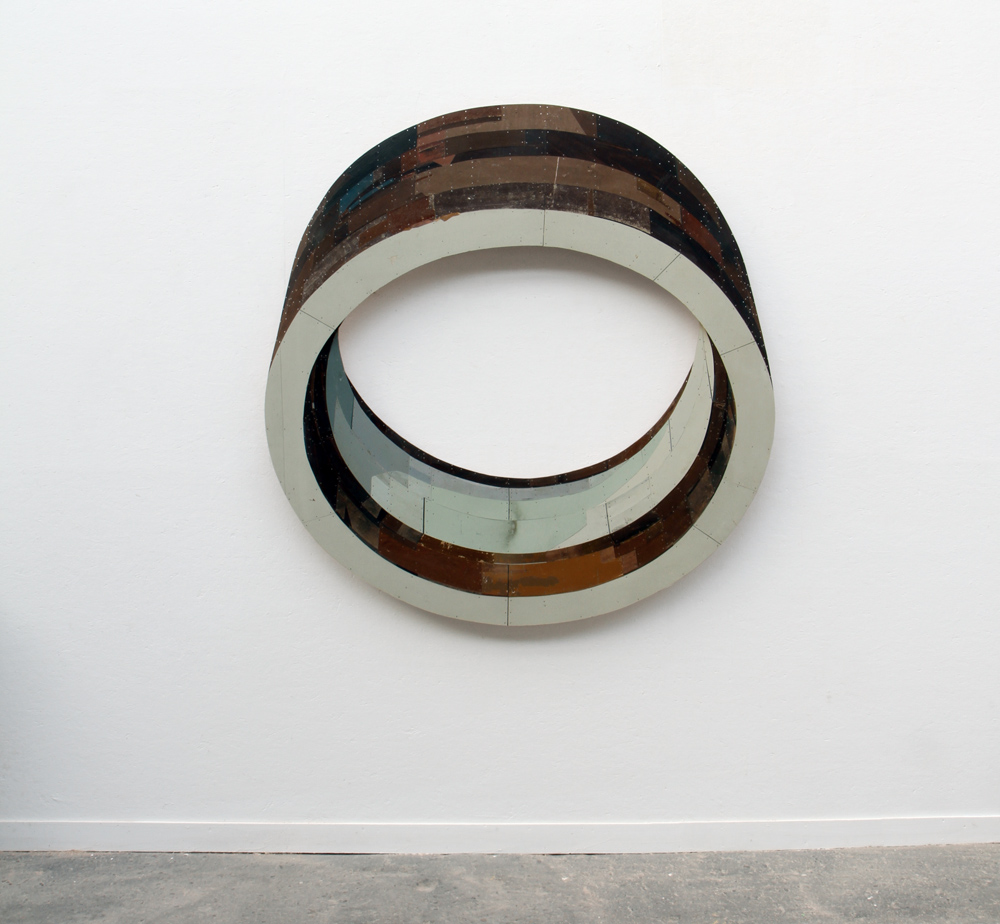
We are in the land of the giants today. Today’s plan includes seeing a bit more of the Redwoods and driving through a tree! I’ve been wanting to do that since I first saw a photo of the Chandelier Tree many moons ago. These enormous trees, the huge haystack rocks in Oregon and just the wildness of the Pacific remind us of how very small we are in this large universe. In his bas relief sculptures, Dutch artist Ron van der Ende uses found wood to sculpt and “paint” his own colossal objects.
Bas-relief sculpture is all about angles and perception. When viewed from one angle, the sculpture may not make sense, but when taken in from the front, it seems to float in true 3-dimensional form. As van der Ende is creating his pieces, he uses pieces of painted found wood to create the colors you see– these aren’t sculptures constructed, then painted. The artist is painting with the found wood. Using the existing finishes of the wood in such a way creates a wonderful sense of texture, which only serves to amplify the depth created by the bas-relief technique.
I hope those last two images give you a sense of the enormity of scale van der Ende employs, making these sculptures as imposing as they are impressive, just like our friends the Redwoods.
Creating and choosing art for healthcare environments is about much more than just beautifying a space. People in those environments are often worried, stressed, sad, and in need of healing. Experts have found that through evidence-based design, these places can become much more warm and welcoming and certain design choices can actually aid the healing process. Carefully chosen artwork in these settings not only has a positive impact on the patients, visitors, and staff, but also on the perception of care given by the facility.
I’ve had several artists, designers, and publishers ask about placing artwork in healthcare environments. They want to be a part of creating a healing environment, but aren’t sure how to go about it. So considering evidence-based design and my own experiences in curating art for healthcare, I’ve put together a few guiding principles when creating or choosing art for healthcare environments–
1 | happy, engaging imagery
Nine times out of ten, unless you’re there for the entrance of a new baby into the world, being in a hospital or other type of healthcare environment is not a happy or joyful occasion. And with all the weird smells, strange noises, and necessary sterility of these settings, no wonder they can be seen as such cold, intimidating places! Creating and curating art for healthcare environments that fosters a more warm, welcoming atmosphere goes a long way toward making patients and visitors feel more at ease in their surroundings. Work that makes us smile, reminds us of family and love, and calls to mind memories of happy times all can work together to ease the mind and spirit.
Often when you ask a hospital patient how they’re doing, you may get an answer that begins with “I’d rather be…”. Patients and visitors often wish they were anywhere but where they are. Artwork that creates a sense of voyeuristic escape can lessen anxiety by giving the viewer a means of liberation from their current situation. They’re able to think less about their pain or circumstances as their mind wanders and wonders what might be over that hill or around that bend.
3 | create a sense of calm, peacefulness and positivity
By using natural, organic imagery as symbols of peace, restoration, and comfort, the artwork in healthcare environments can become instruments of healing. Studies have shown that patients shown nurturing scenes of nature required lower strength pain medication. These kinds of images also foster a sense of the world outside the walls of the facility and the goal to get back to where the skies are blue and the waters peaceful.
Hospitals can be lonely, scary places. Choosing artwork that may garner conversation goes a long way toward creating connections among patients and visitors, as well as providing a much needed mental escape. Sculpture and interactive digital artwork do well to give patients and visitors a purposeful sense of exploration and the unexpected and abstract can create a path to solving a puzzle and thereby, a means of distraction.
5 | create reflections of community
Each hospital or healthcare facility has an important role to play as a part of a community. Honoring the history, landmarks, and atmosphere of that community can create a sense of familiarity and connection in places where we often feel helpless and alone.
Creating and curating art for healthcare environments is about so much more than simply manufacturing a pleasing looking space. Instead of merely being places of clinical procedures and processes, through art and design hospitals and other medical facilities are becoming places of nurturing and healing. Artists, designers, and consultants are looking more and more not at what the artwork speaks to them, but how it promotes positivity and restoration to the visitor and patient.
You can read more on evidence based design in this Guide to Evidence Based Art by Kathy Hathorn, MA, and Upali Nanda, Ph.D.
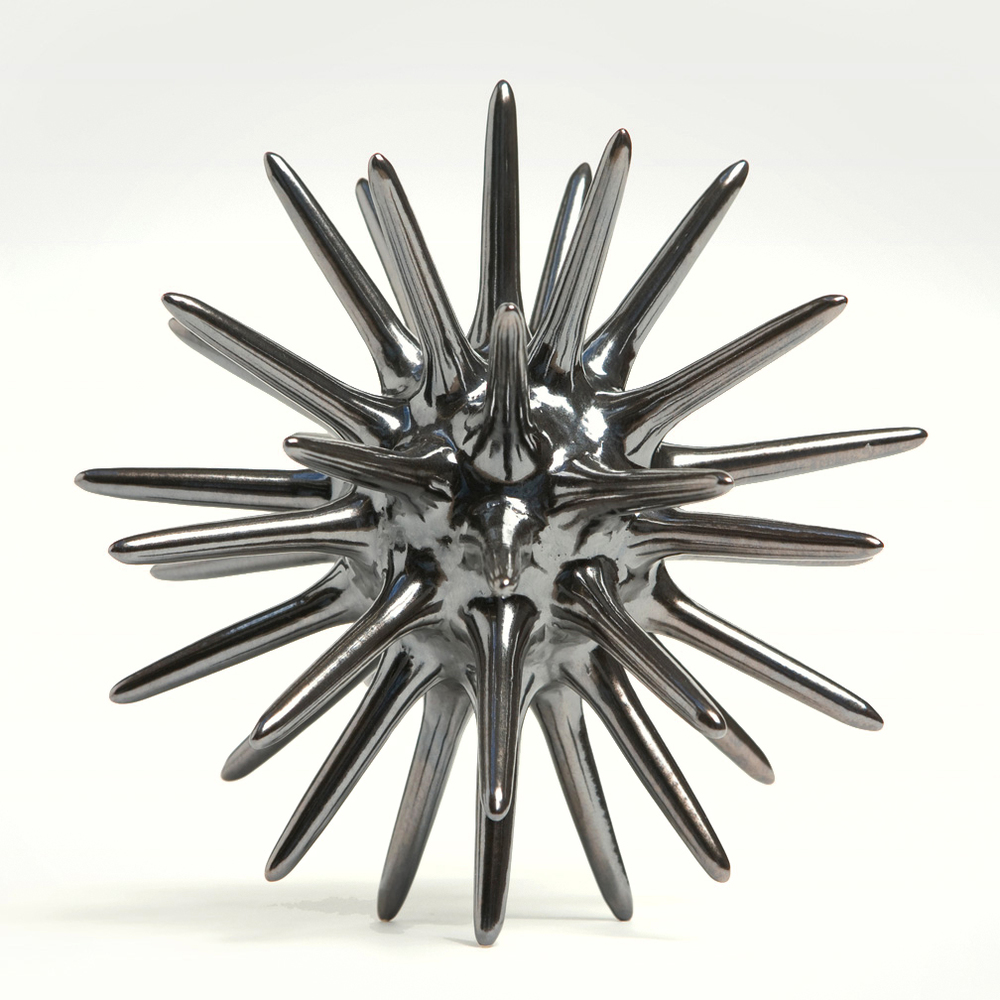
I’m always fascinated by artists who find inspiration in nature. What excites me even more is coming across an artist who interprets organic forms into work that is decidedly modern. Brooklyn artist Pamela Sunday creates contemporary ceramic sculptures that nod to the biological forms found all around and inside us.
Out of clay, the artist sculpts these magnificently strong yet delicate forms, so much like the environmental elements from which they take their inspiration. Our bodies and the nature around us can withstand so much, but we still have to keep reminding ourselves that each body, each habitat has its own tipping point. Life really is such a precarious balance, isn’t it?
I seem to have a thing for pale, sad faces right now ( Exhibit A ). But just take a look at these wood sculptures by Italian artist Bruno Walpoth and tell me how I could not share them with you? Modern, young faces full of poignant longing, these pieces are the anti-selfie. Representations of true emotions felt by real people, rather than a facade put up to show the world how cool and hip we think we are.
There is such a vulnerability about these gentle wood portraits. That seems to be an emotion we could all stand to use a bit more of in our interactions. To be honest enough, with ourselves and others– to truly be real in the way we communicate with our fellow humans, might go a long way in creating the connectedness that so many of us long for.
They’re creamy and they’re dreamy. And I want to make them mine, each and every one! I’m talking about the ceramic work of California artist Sara Paloma. Whether it’s the color of the glaze, the texture or the shapes that are just so, there is something about these pieces that grabs my heart.
Just so subtle and supple.. like a wisp of cloud. Her work is definitely going on my “coveting” list! Read more about Sara Paloma on her website and see more work available for purchase in her Etsy shop. And she’s having a sale!!
PS– You may have noticed that I’ve stopped doing Design Foraging on Fridays. There were just too many artists I wanted to share, so I decided to do five artist features each week instead of four! Design Foraging will now be an occasional posting, at least once a month, probably more. 😉
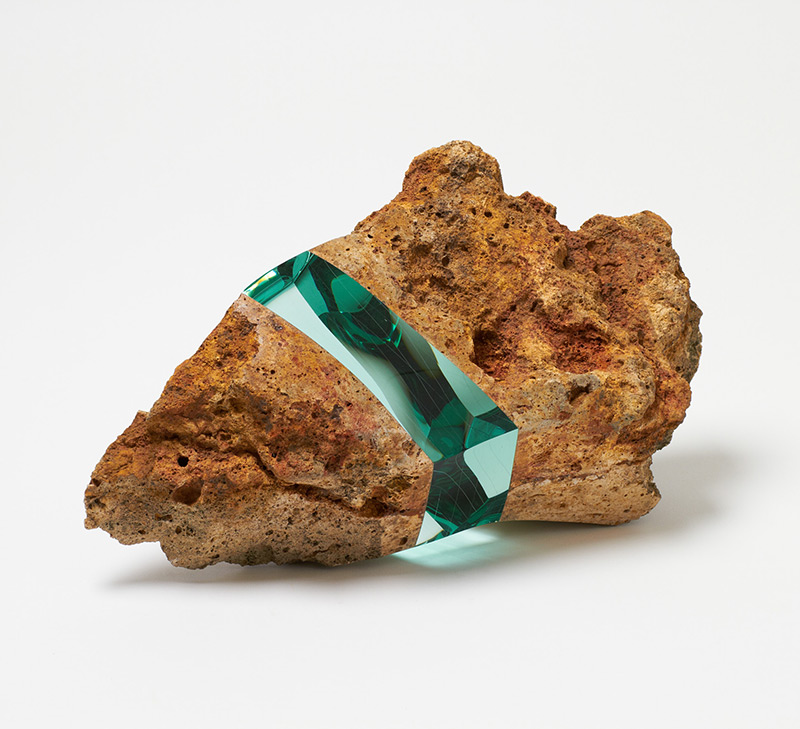
The rocks out here in the Northwest fascinate me. Growing up in Florida, there wasn’t much in the way of rocks that I remember.. just tiny pebbles and sand. But out here, there are big, beautiful rocks! I always marvel at the variety when we find ourselves in a dry, rocky river bed. Dusseldorf-based artist Ramon Todo is juxtaposing rocks with their distant cousin, glass, for some stunning studies in contrast.
The blue green hue and reflective surface of the glass give these stones a landscape-ish quality, almost as if the sky or sea were caught between the two pieces of earth. Such an interesting contrast of textures, don’t you think? And the glass is perfectly cut to fit between the stones, as if it evolved there naturally. I want to turn one over in my hand and see how the light changes the reflections in the glass.
If you’d like to see more from Ramon Todo, please visit his page at Art Front Gallery.
Mr. F and I often talk about what has drawn us to the Northwest. The mild summers have a lot to do with it, but even more, is the feeling that, in comparison to so much of the US, there is a wildness here. Big cities are few and far between, the landscape filled more with small towns, rural communities and much still wild and untamed wilderness. The thought that we can go out on a hike and see deer, elk, bears, and even moose in some areas, is thrilling. We are living on the edge, ya’ll. But that also means that we, as humans and society are ever encroaching on the wilderness and the animals found therein are paying the price. These themes of nature and our relationship with it and effects upon it are the catalyst for the work of Portland sculptor, Rachel Denny.
In her work, Denny has created a visual language for exploring the charm and delicacy to be found in the natural world. Whimsy belies a deeper meaning, if we take the time to look beyond what we see.
Rachel Denny’s latest work can currently be seen in her solo exhibition, Outside In at Foster/White Gallery in Seattle through October 26th. You can also see more of Denny’s work on her website.